
From morning breakfasts to evening dinners, Tasteza Recipes offers quick and easy recipe ideas, featuring everything from wholesome meals to delicious desserts for every moment and every occasion.



Black beans and rice turns a short list of familiar ingredients into a filling one-pot dinner with tender grains, hearty beans, and browned sausage in every serving. Onion, bell pepper, garlic, cumin, and paprika create a savory base, while broth carries those flavors through the rice as it cooks.
Busy evenings benefit from a meal that needs only one covered pot and a few minutes of active preparation. Once the vegetables soften and the sausage develops color, the remaining ingredients simmer together with little attention, leaving minimal cleanup afterward.
Home cooks can also adapt black beans and rice with sausage to suit the ingredients already available. Smoked sausage brings a deeper savory character, chicken or turkey sausage offers a lighter option, and either canned or home-cooked beans works well when handled correctly.
One-Pot Comfort Built for Busy Evenings
A single-pot dinner is most useful when every stage contributes to the finished flavor. Softening the onion and bell pepper first creates an aromatic foundation, while browning the sausage leaves flavorful drippings that coat the rice and season the broth.
After the broth reaches a boil, the workload drops considerably. Low heat and a secure lid allow the rice to absorb liquid evenly, making the meal practical for weeknights, casual family dinners, or planned lunches.
Minimal equipment also improves consistency. A wide, heavy pot or deep lidded skillet gives the sausage enough room to brown and provides an even surface for the rice to simmer without crowded hot spots.
Sausage, Rice, and Bean Choices That Matter
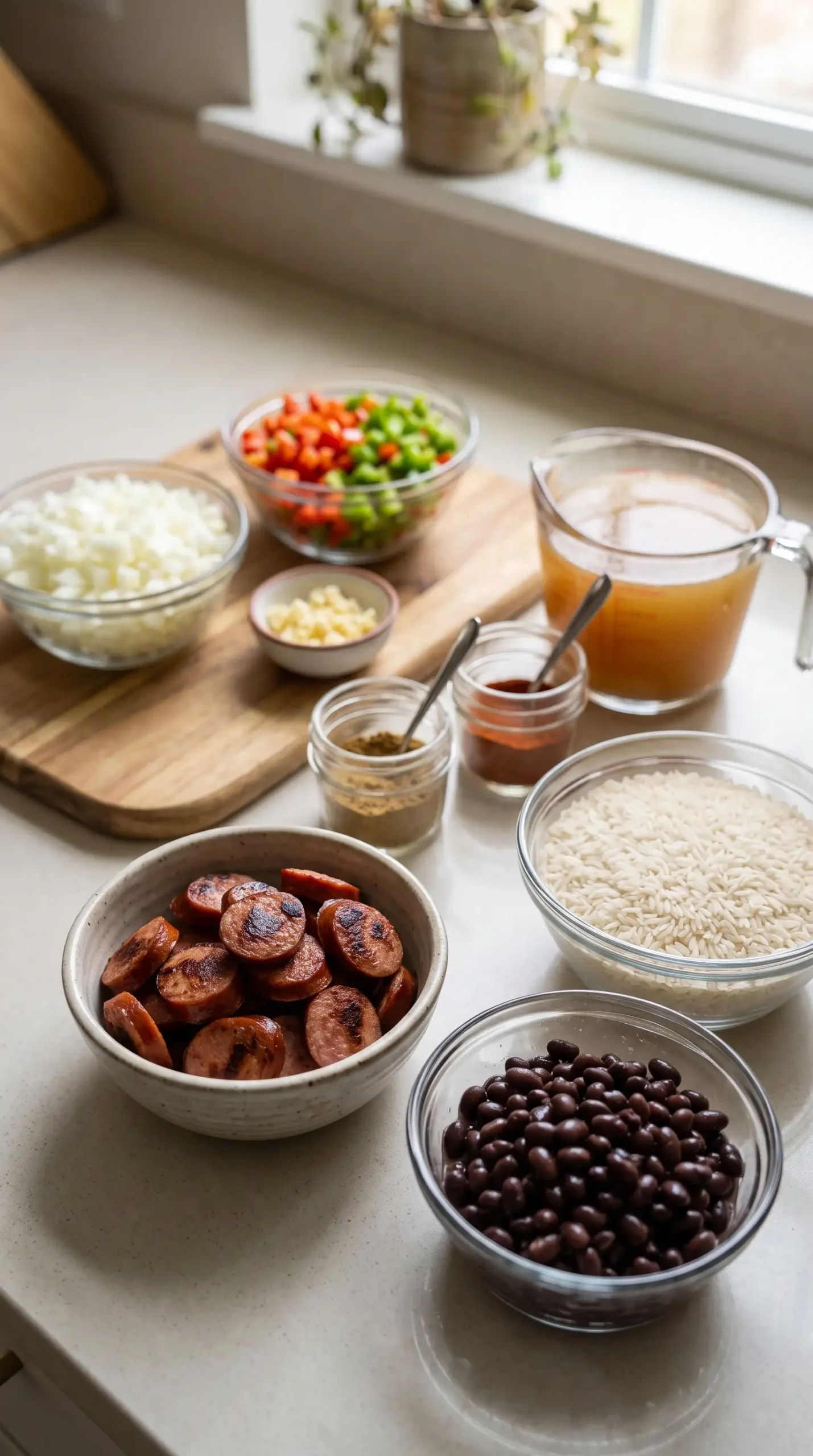
Smoked sausage is especially effective because it arrives fully seasoned and develops browned edges quickly. Andouille can add a bolder profile, while chicken or turkey sausage follows the same cooking approach when a milder result is preferred.
White rice matches the supplied broth amount and cooking window. A brief rinse removes loose surface starch, which can help the grains remain distinct once the pot is fluffed. For consistent results, use a basic jasmine rice method to understand how rinsing and stovetop timing affect the final texture.
Canned black beans offer dependable convenience, but draining and rinsing them is important. Removing the canning liquid reduces excess sodium and prevents the rice mixture from becoming cloudy or overly thick.
| Ingredient choice | Best handling | Effect on the finished pot |
|---|---|---|
| Smoked sausage | Slice and brown until the edges color | Deeper savory flavor and firmer pieces |
| Chicken or turkey sausage | Brown gently and monitor added salt | Lighter flavor with the same one-pot method |
| Canned black beans | Drain and rinse before adding | Cleaner flavor and controlled seasoning |
| Cooked black beans | Drain off excess cooking liquid | Soft, hearty beans without diluting the broth |
Browning Creates the Savory Foundation

Moderate heat gives the chopped onion and bell pepper time to soften without scorching the garlic. Garlic should become fragrant and mellow, not dark brown, because burned bits can make the entire pot taste harsh.
Space around the sausage encourages browning. When slices are packed tightly or stirred constantly, released moisture collects in the pan and the meat steams instead of developing color.
The color developed during this step comes from the Maillard reaction, a browning process that helps create deeper savory flavors when proteins and carbohydrates are heated together.
Cumin and paprika benefit from brief contact with the warm fat before the broth is added. Stirring the spices through the sausage, beans, and rice distributes their flavor evenly and removes any dry pockets of seasoning.
A Low Simmer Protects the Rice Texture
Bringing the broth to a boil begins the cooking process quickly, but the heat should be reduced as soon as the pot is covered. A vigorous boil can evaporate liquid too fast, cook the grains unevenly, and scorch the bottom before the center is tender.
Keeping the lid closed preserves steam. Lifting it repeatedly releases heat and changes the liquid balance, which can leave the upper layer undercooked while the rice closest to the base becomes soft.
Once the visible liquid has been absorbed, a covered rest off the heat allows trapped steam to finish the grains gently. Fluffing with a fork after that pause separates the rice without crushing it into the beans.
Texture Checkpoints Before Serving
Correctly cooked sausage black beans and rice should show tender grains, evenly distributed beans, and no pool of broth at the bottom. Use the following signs to judge the pot without overworking it.
- At the boil: liquid should bubble across the surface before the lid goes on.
- During the simmer: only quiet, occasional bubbling should be audible beneath the cover.
- Near completion: rice should look plump and the surface should appear moist but not soupy.
- After resting: a fork should lift the grains easily without exposing excess liquid.
Simple Finishes for a Balanced Bowl
Fresh cilantro gives the warm pot a bright herbal contrast, while sliced green onions can provide a sharper finish. Lime juice, Greek yogurt, or avocado salsa may be added at the table, allowing each serving to balance the smoky sausage and earthy beans without changing the base meal.
Serving Ideas Beyond the Basic Bowl
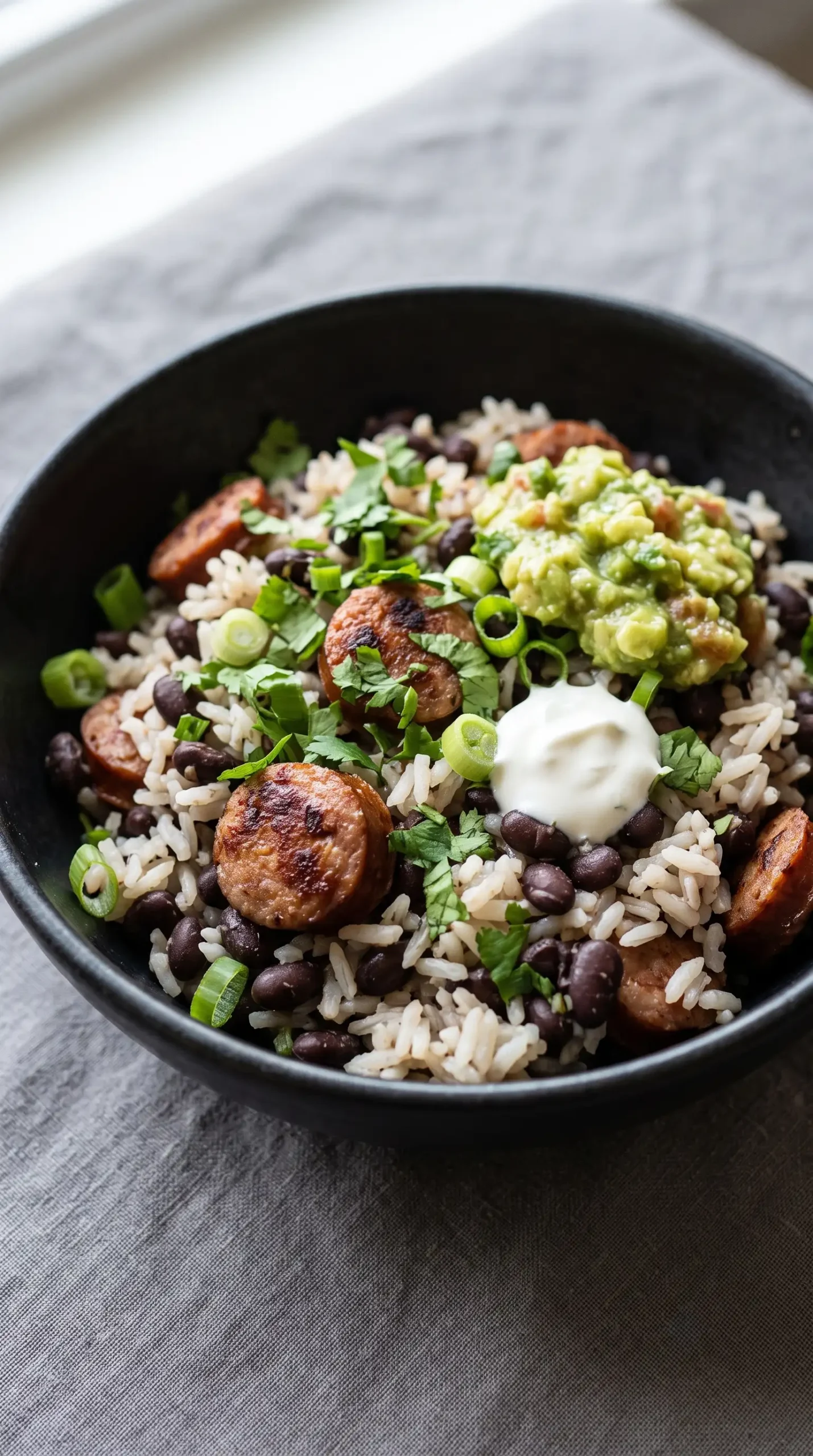
Crisp side dishes complement the soft rice and beans particularly well. A green salad, cabbage slaw, or roasted corn introduces freshness and texture without competing with the cumin and paprika.
For a more substantial plate, spoon the mixture into wide bowls and add a cool topping just before eating. Greek yogurt supplies creaminess, while avocado salsa brings richness and a fresh contrast.
Casual drinks fit the homey character of the meal. Iced tea offers a clean pairing, and a cold beer can stand up to smoked or strongly seasoned sausage.
Storage That Keeps the Rice Moist
Prompt cooling helps preserve both quality and food safety. Transfer leftovers to shallow airtight containers after the pot has cooled briefly, and refrigerate them within the stated one-hour window.
Refrigerated portions keep for up to four days. Adding a small splash of broth or water before reheating restores moisture that the rice absorbs during storage, while a cover traps steam and prevents dry edges.
Freezer portions can be stored for up to three months. Thawing overnight in the refrigerator promotes more even reheating than warming a solid block directly from frozen.
Variations That Preserve the One-Pot Method
Useful variations keep the same liquid-driven cooking structure while changing the flavor or vegetable mix. The table below shows adjustments supported by the original dish without turning it into a different meal.
| Variation | Adjustment | When to add it |
|---|---|---|
| Lighter sausage version | Use chicken or turkey sausage | Brown it in the same stage as smoked sausage |
| Spicier pot | Add diced jalapeño or use sliced chorizo | Cook with the onion and bell pepper |
| More vegetables | Add corn or diced tomato | Stir in with the beans |
| Vegetarian version | Omit sausage and increase mushrooms or bell pepper | Sauté the vegetables before adding rice and broth |
Mistakes That Undermine Black Beans and Rice
Skipping proper browning is the fastest way to lose depth. Sausage that remains pale contributes less flavor to the cooking fat, leaving the rice dependent on broth and spices alone.
Boiling too hard creates a second common problem. Excessive heat can dry the top, scorch the base, and soften the lower grains before the center of the pot has cooked evenly.
Loose measuring also affects texture because rice depends on a reliable liquid ratio. Use the stated amount of rice and broth, then avoid adding unmeasured bean liquid or repeatedly releasing steam.
- Pale sausage: brown in an uncrowded pot before adding the rice.
- Scorched bottom: lower the heat immediately after the broth boils.
- Mushy grains: keep the lid closed and fluff only after the covered rest.
- Overly salty flavor: choose low-sodium broth, rinse canned beans, and season near the end.
Scaling the Pot Without Losing Consistency
Doubling works best in a pot broad enough to brown the sausage and deep enough to contain the simmering broth, while halving is easier in a smaller vessel that prevents rapid evaporation. Maintain the same ingredient proportions and judge doneness by absorbed liquid and tender rice, not by changing the heat to hurry the process.
A Practical Rhythm for Weeknight Cooking
Preparation moves efficiently when the onion, bell pepper, garlic, and sausage are cut before the pot is heated. Keeping the beans rinsed, the rice measured, and the broth ready prevents pauses that could overcook the aromatics.
While the covered pot simmers, prepare garnishes or a crisp side dish instead of disturbing the rice. That hands-off period is one of the main advantages of one pot black beans and rice.
Meal-prep portions are easiest to manage immediately after dinner. Dividing cooled leftovers into individual containers reduces repeated reheating and makes it simple to add a splash of liquid to each serving.
Controlled Heat Turns Pantry Staples Into a Complete Dinner
Brown sausage and softened vegetables establish the flavor that carries through every grain. Once the broth is added, patient low heat becomes the most important cooking judgment because it protects the rice from scorching, uneven absorption, and excessive softness.
A covered rest completes the pot without extra ingredients or extra equipment. The result is a cohesive dinner in which black beans and rice remain hearty and distinct while the sausage supplies savory depth throughout.
Rice Texture and Sausage Questions Answered
Can brown rice replace white rice?
Brown rice needs more liquid and a longer cooking period. Increase the broth to 2 1/2 cups and allow about 40 to 45 minutes of covered simmering, checking that the grains are tender before resting the pot.
Can the meal be cooked in a skillet?
A deep skillet works when it has enough capacity and a tight-fitting lid. Shallow uncovered pans release too much steam, so choose one that can hold the broth safely and maintain a gentle covered simmer.
What should I do if the rice is still firm?
Add a small splash of broth or water, cover the pot again, and continue cooking over low heat until the grains soften. Use only a modest amount so the beans and lower layer do not become mushy.
How can I make the dish less salty?
Use low-sodium broth, rinse canned beans thoroughly, and consider the seasoning already present in the sausage. Wait until the rice is nearly cooked before deciding whether additional salt is needed.
When should spinach or kale be added?
Stir leafy greens into the hot pot near the end of cooking. The remaining steam will wilt them while helping them retain more texture than they would after a full simmer.
Which sausage gives the boldest flavor?
Smoked sausage and andouille provide the strongest savory character, while flavored chicken or turkey sausage creates a milder result. Any choice should be browned well so its surface contributes flavor to the rice.
Black Beans and Rice with Sausage One-Pot Dinner Meal
Black Beans and Rice with Sausage is a hearty one-pot dinner with tender rice, savory sausage, and satisfying flavors that make it an easy choice for a comforting weeknight meal.
Ingredients
Method
Preparation
- Warm oil in a large pot over medium heat. Add the onion, bell pepper, and garlic, then cook until the vegetables soften.
- Add the sausage to the pot and cook until browned.
- Mix in the black beans, rice, cumin, paprika, salt, and pepper until evenly combined.
- Add the vegetable or chicken broth and bring the mixture to a boil.
- Lower the heat, cover the pot, and simmer for about 20 minutes until the rice is fully cooked and the liquid has been absorbed.
- Take the pot off the heat and keep it covered while it rests for 5 minutes.
- Fluff the rice with a fork, add fresh cilantro if desired, and serve hot.
Notes
Rinse the rice briefly before cooking for firmer grains, and drain and rinse canned black beans to help reduce excess liquid and sodium.