
From morning breakfasts to evening dinners, Tasteza Recipes offers quick and easy recipe ideas, featuring everything from wholesome meals to delicious desserts for every moment and every occasion.


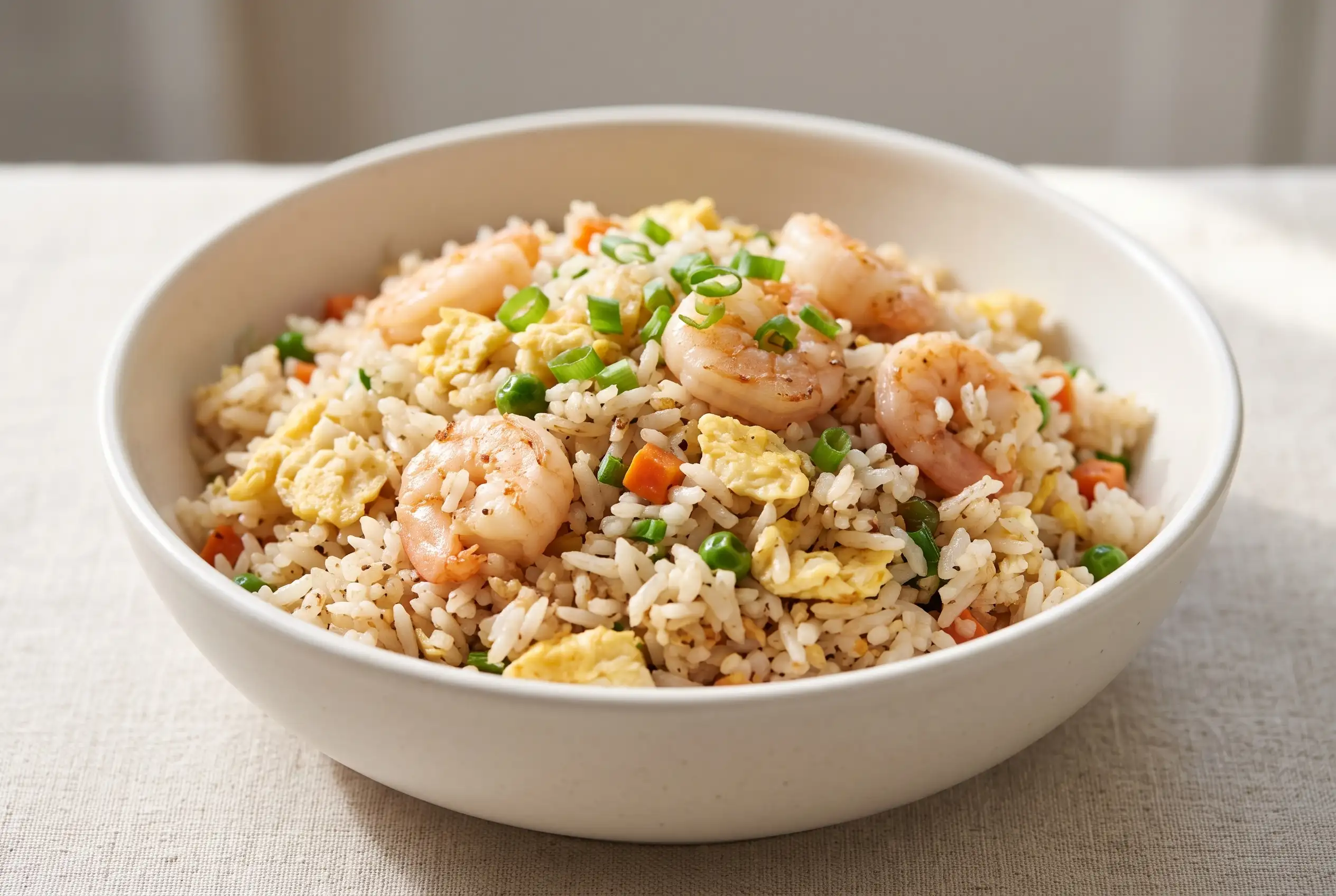
Shrimp fried rice brings together crisped rice, tender shrimp, eggs, vegetables, and bright garlic notes in one pan. An easy shrimp fried rice recipe fits busy evenings because it transforms day-old cooked white rice and familiar pantry staples into a satisfying meal without complicated preparation.
Busy cooks often choose this skillet because leftover rice becomes an advantage instead of something to discard. The separated grains from chilled cooked rice can move through a hot pan easily, helping the dish develop its signature fried texture while shrimp and seasonings stay distinct.
Why Shrimp Fried Rice Works for Busy Dinners
Weeknight shrimp fried rice succeeds because the cooking approach matches the ingredients. Each part spends limited time over high heat, allowing the shrimp, eggs, rice, and vegetables to keep their own texture when they are combined.
Practical meals benefit from flexible portions and simple preparation. The skillet format works for family dinners, meal prep containers, or a casual meal for guests when there is no need for extensive planning.
Day-Old Rice Creates Better Skillet Texture
Cold cooked rice is the foundation that separates fried rice from a softer rice dish. Freshly prepared rice contains more moisture and tends to clump, while cooled rice stays separate because chilled grains firm up before they return to the hot pan.
Proper rice preparation changes how the entire skillet behaves during cooking. Dry, separated grains absorb soy sauce and sesame oil evenly while still allowing high heat to create a light crisp surface, a result supported by careful use of a crispy rice skillet method.
| Rice condition | Cooking result | Best approach |
|---|---|---|
| Day-old cooked white rice | Separated grains with a crisp texture | Use directly after breaking up clumps |
| Freshly cooked rice | More moisture and softer texture | Cool completely before stir-frying |
| Cold refrigerated rice | Easier handling in a hot pan | Toss quickly to distribute seasoning |
Key Ingredients That Shape Shrimp Fried Rice Flavor
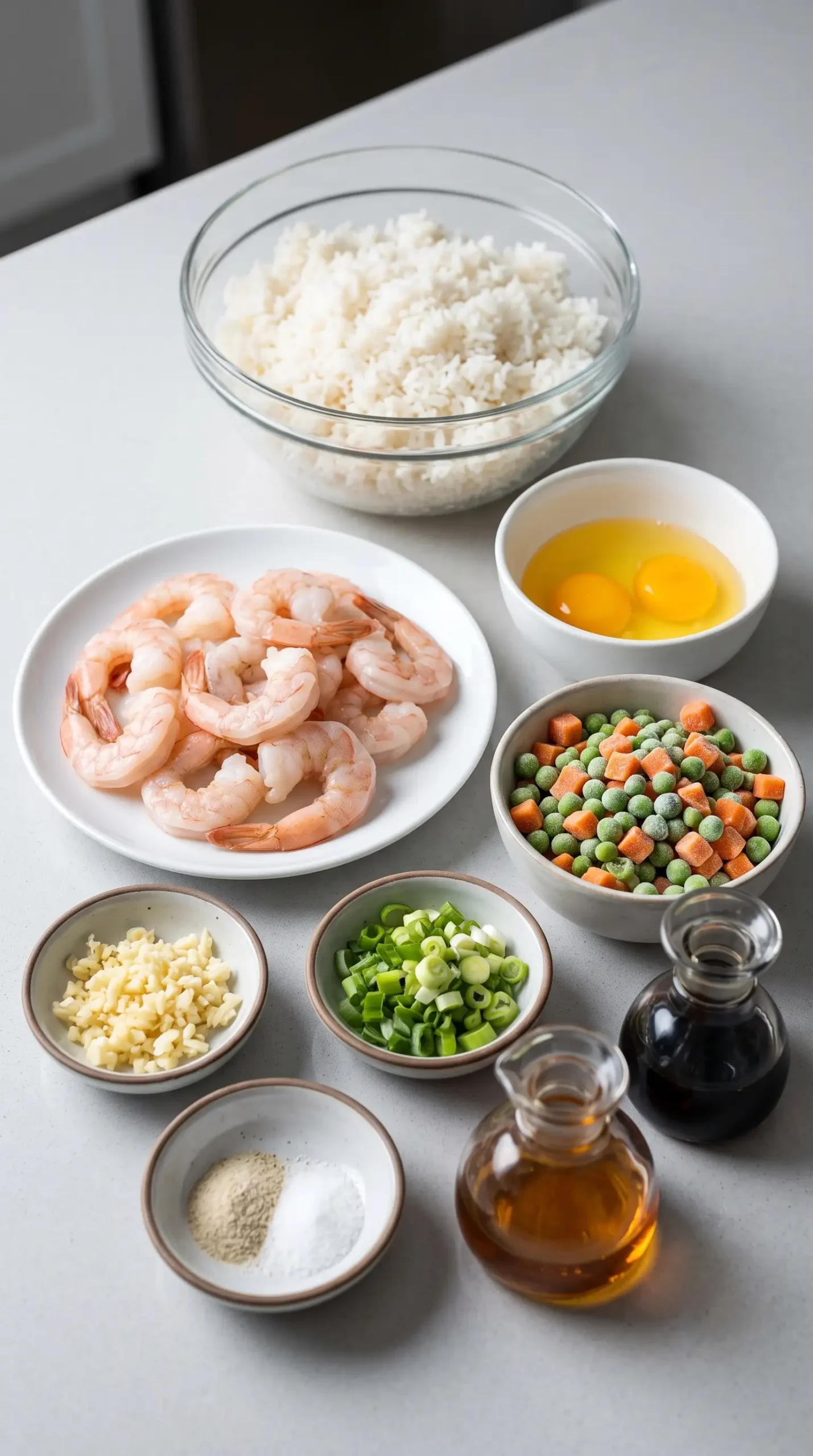
Ingredient choices have the biggest impact when selecting the parts that define the dish. Shrimp, eggs, frozen mixed vegetables, garlic, green onions, soy sauce, and sesame oil create the familiar combination expected from this skillet meal.
Shrimp quality affects the texture of every serving. Fresh or frozen shrimp both work, and peeled, deveined shrimp make preparation easier while allowing attention to stay on quick cooking.
Seasoning choices require restraint because the rice needs to remain balanced. Soy sauce provides savory flavor, while sesame oil contributes a nutty aroma when added at the right point in the process.
- Shrimp selection: Choose fresh or frozen shrimp that are peeled and deveined for convenience.
- Rice preparation: Use day-old cooked white rice for grains that separate during frying.
- Finishing touches: Add green onions at serving time for freshness and color.
High Heat Controls the Shrimp Fried Rice Skillet
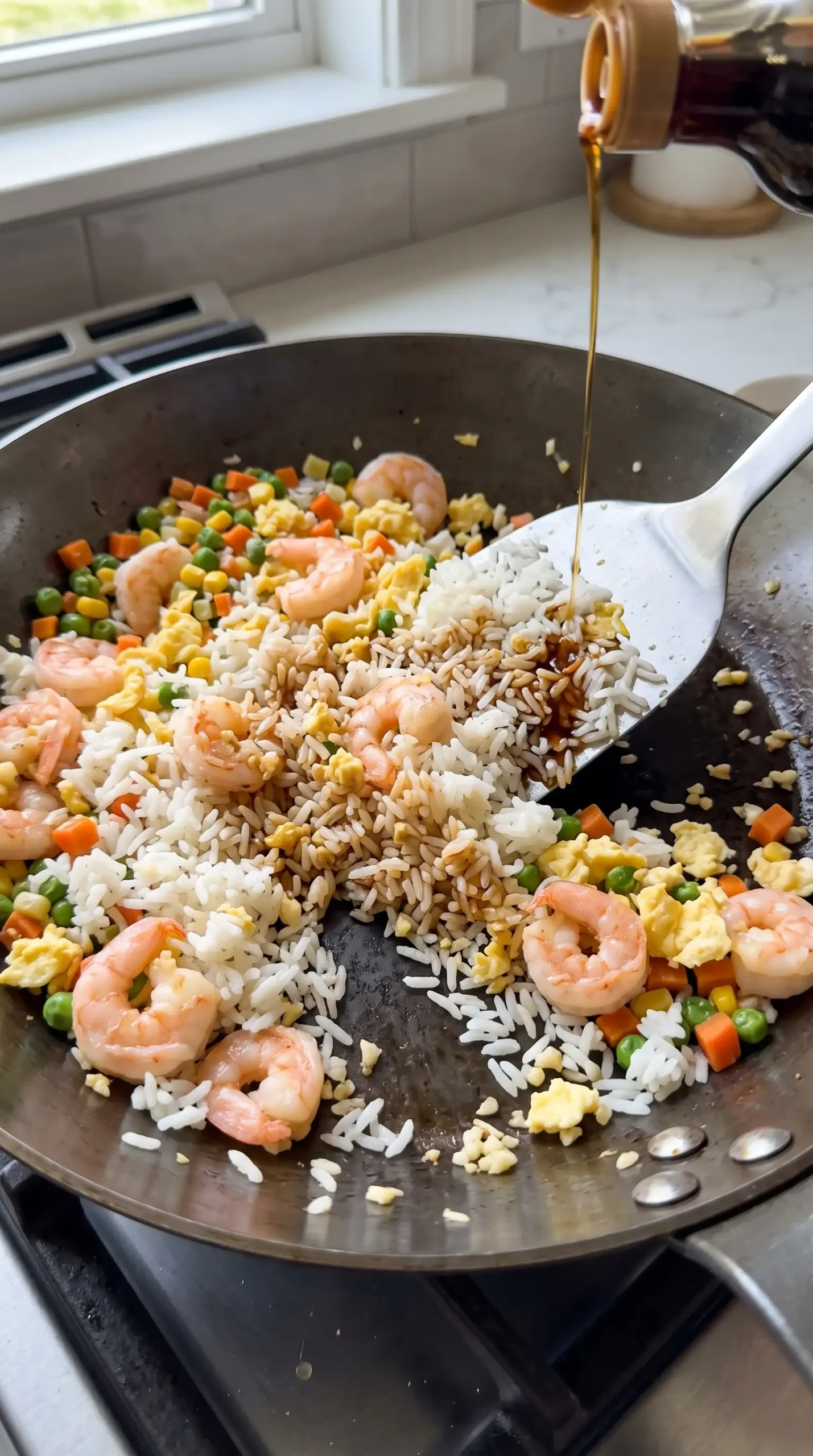
Cooking control determines whether a shrimp fried rice skillet has distinct textures or a steamed result. A properly heated pan helps the rice develop a light crisp while quick tossing keeps the ingredients moving.
Separate stages matter because shrimp and eggs require different handling from rice. Cooking shrimp until pink and opaque protects tenderness, while scrambling eggs separately creates small curds that distribute throughout the finished dish.
Seasoning placement also affects the outcome. Adding soy sauce and sesame oil during the later part of cooking helps coat the grains evenly without introducing unnecessary moisture early in the process.
Avoid These Shrimp Fried Rice Mistakes
Common errors in shrimp fried rice usually come from moisture and temperature problems. Freshly cooked rice can become clumpy, and a crowded pan can lose the heat needed for frying.
| Mistake | What happens | Better solution |
|---|---|---|
| Using warm fresh rice | Rice clumps and steams | Start with day-old cooked rice |
| Overcrowding the pan | Temperature drops during cooking | Cook in batches if needed |
| Adding too much liquid | Rice becomes soggy | Use minimal liquid ingredients |
Careful handling prevents these issues before they appear. Keeping the skillet hot, tossing consistently, and limiting extra moisture preserves the texture that makes fried rice appealing.
Serving Shrimp Fried Rice With Fresh Additions
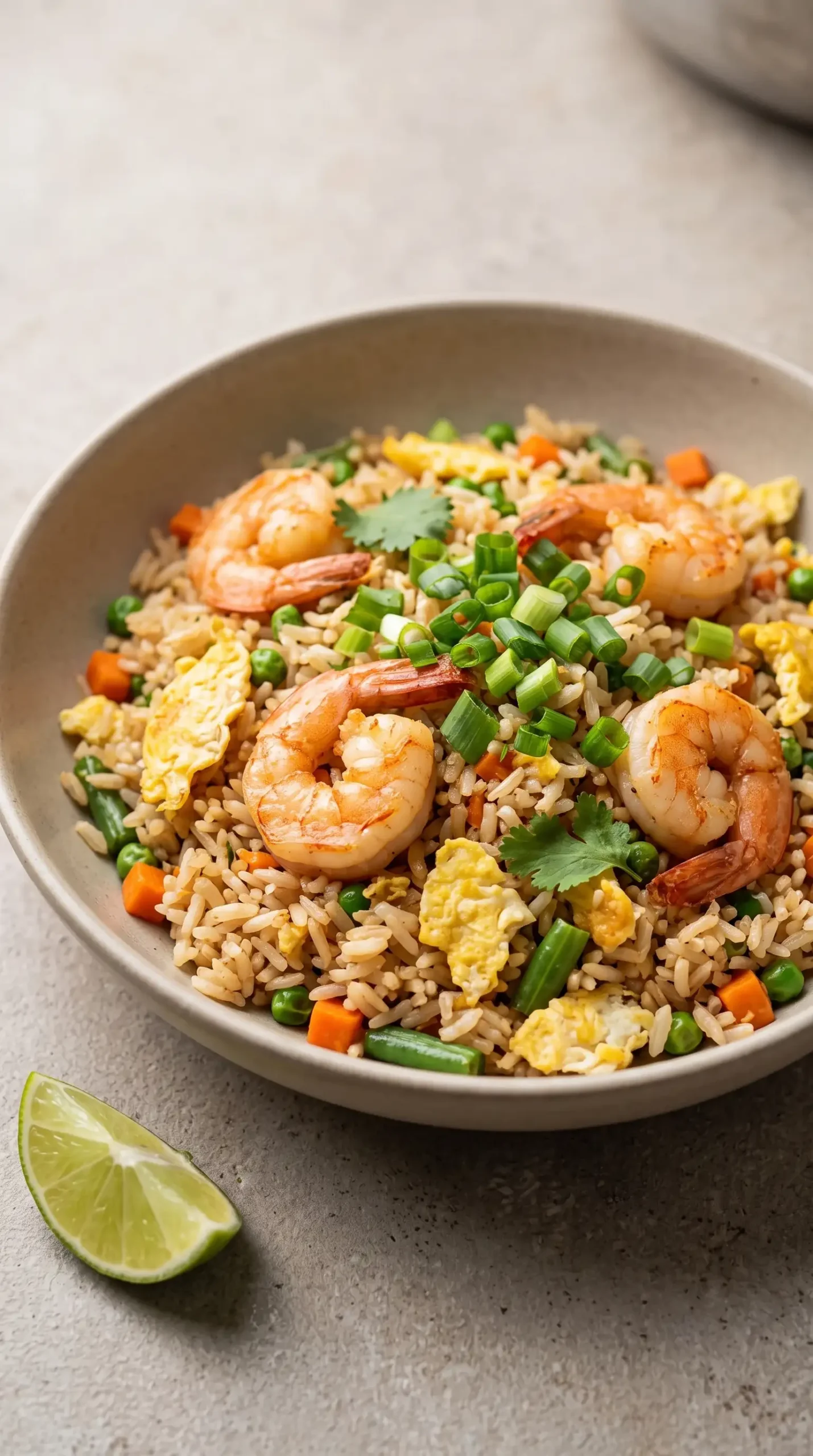
Presentation can stay simple because the rice and shrimp provide the main focus. Serve the skillet directly from the pan or move it to a shallow dish for an easy table presentation.
Side dishes can add contrast without competing with the main meal. Cucumber salad or steamed bok choy brings freshness, while jasmine tea, a crisp lager, or dry white wine pairs with the savory profile.
- Fresh finish: Sprinkle chopped green onions just before serving.
- Extra seasoning: Offer additional soy sauce or a small drizzle of sesame oil.
- Citrus option: Add a lime wedge when a brighter flavor is desired.
Keeping Leftover Shrimp Fried Rice Fresh
Storage begins with cooling the cooked rice quickly after the meal. Place cooled fried rice in an airtight container and refrigerate it to maintain quality.
Refrigerated portions are best used within 3 days, while frozen portions can extend storage for up to 2 months. Portioning before freezing makes later reheating more convenient.
Reheating works best when texture is restored gently. A hot skillet with a small splash of oil or water can help revive the rice after thawing overnight in the refrigerator.
| Storage method | Container choice | Reheating approach |
|---|---|---|
| Refrigerator | Airtight container | Warm in a hot skillet within 3 days |
| Freezer | Portioned airtight containers | Thaw overnight before reheating |
| Cooling process | Shallow containers | Speed cooling before storage |
Flexible Variations for Shrimp Fried Rice
Ingredient swaps can change the character of the skillet while keeping the same cooking approach. Vegetables such as diced bell pepper, snow peas, or shredded carrot can replace the mixed vegetables when different produce is available.
Protein changes also work well with the same technique. Chicken or firm tofu can stand in for shrimp while maintaining the layered cooking style that separates each element.
Planning an Easy Weeknight Shrimp Fried Rice Meal
Advance preparation makes this meal especially useful on busy nights. Having cooked rice ready and keeping common staples available reduces the amount of work needed when dinner time arrives.
Simple organization helps each cooking stage move smoothly. Shrimp can be prepared ahead, vegetables can remain ready to use, and seasonings can be measured before the skillet reaches high heat.
Meal planning does not require a separate dish for every occasion. The same skillet can serve a family meal, create portions for later, or become a straightforward dinner when time is limited.
Shrimp Fried Rice Balances Crisp Rice and Tender Shrimp
The cooked rice and shrimp combination succeeds when temperature and timing work together. Separated grains, quickly cooked shrimp, and controlled seasoning create a skillet where texture remains central.
Reliable results come from respecting the ingredients that need careful handling. Day-old rice supports the crisp texture, while staged cooking keeps shrimp and eggs from losing their best qualities.
Shrimp Fried Rice Questions About Texture and Storage
Can shrimp fried rice use frozen shrimp?
Frozen shrimp can be used after thawing before cooking. Patting the shrimp dry helps limit extra moisture in the skillet and supports even cooking.
Why does my fried rice become soft instead of crisp?
Soft texture often comes from excess moisture. Using day-old rice, a hot wide pan, and limited liquid helps the grains fry instead of steam.
How can rice grains stay separated?
Separated grains come from starting with cooled cooked white rice and keeping the pan temperature high while tossing the ingredients.
Can sesame oil be left out?
Sesame oil can be omitted if needed. Adding a small amount near the end of cooking provides its characteristic aroma without requiring a large quantity.
What makes this skillet suitable for meal prep?
The dish works well for meal prep because it can be portioned into containers, refrigerated, or frozen while keeping the same core flavors.
Shrimp Fried Rice with Eggs and Vegetables
Shrimp fried rice with eggs and vegetables is a quick, flavorful meal with tender shrimp, fluffy eggs, and lightly crisped rice grains. It is a practical weeknight recipe with a satisfying mix of savory flavors and textures.
Ingredients
Method
Cooking
- Cook the shrimp in a hot skillet until they turn pink and opaque, then transfer them out of the skillet and set aside.
- Add the eggs to the same skillet and scramble until fully cooked into small pieces, then remove and set aside.
- Place the cooked rice, frozen vegetables, garlic, and soy sauce into the skillet.
- Stir-fry the rice mixture over high heat until the grains separate, develop a lightly crisp texture, and are evenly seasoned.
- Add the cooked shrimp and scrambled eggs back to the skillet and mix until all components are combined.
- Finish the fried rice with sesame oil and sprinkle with chopped green onions before serving.
Notes
Use completely cooled day-old rice for the best texture, and avoid filling the pan too much so the rice has room to crisp properly.