
From morning breakfasts to evening dinners, Tasteza Recipes offers quick and easy recipe ideas, featuring everything from wholesome meals to delicious desserts for every moment and every occasion.


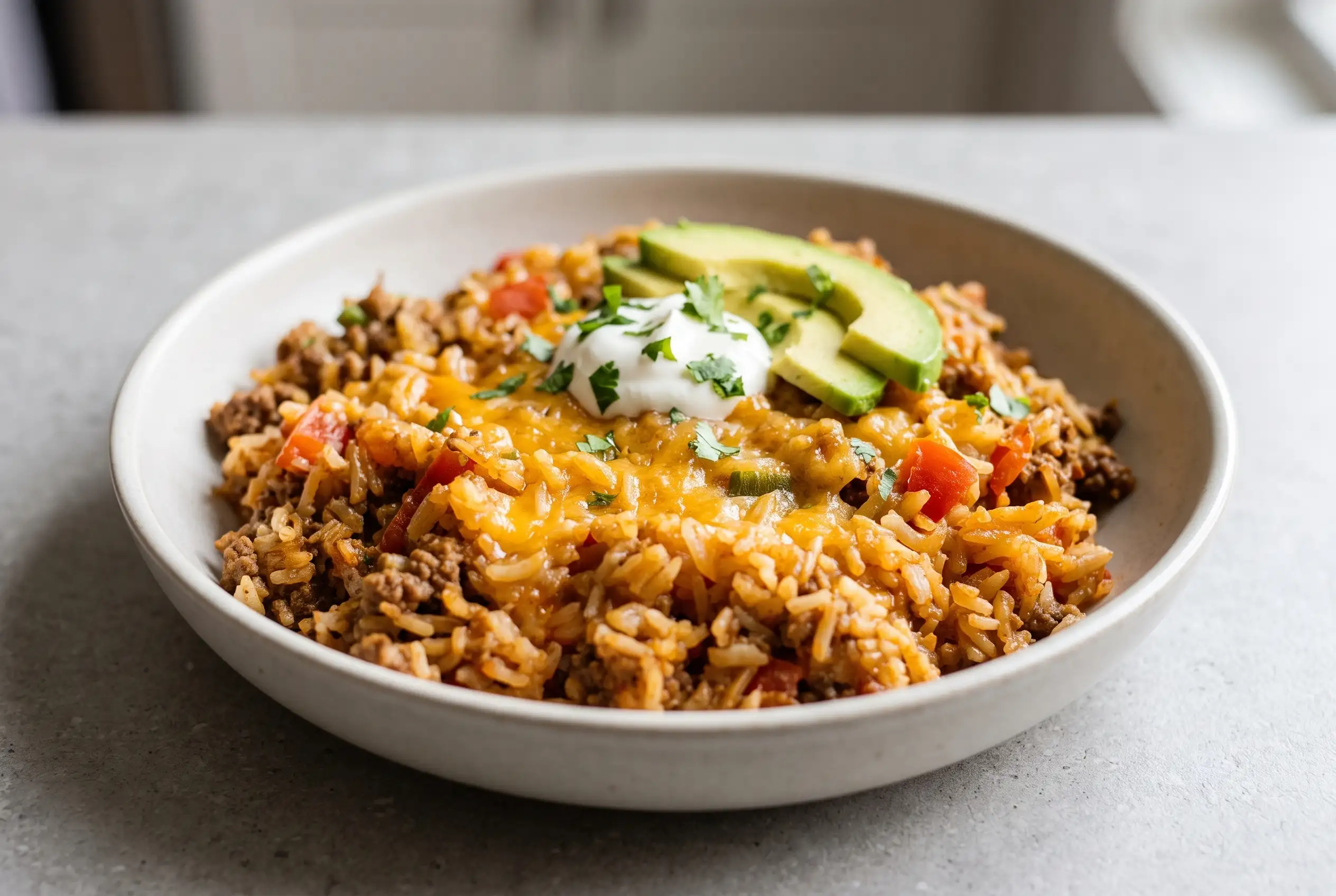
Cheesy taco rice turns seasoned ground beef, tomatoes, long-grain rice, and melted cheese into a hearty dinner cooked entirely in one skillet. Savory taco spices and mild tomato heat settle into every grain, while the cheese creates a soft, creamy finish that makes the meal especially appealing on busy weeknights.
Built from familiar pantry ingredients, the dish requires only a short period of active cooking before the covered skillet handles most of the work. Toppings can be set out separately, allowing each person to add sour cream, guacamole, pico de gallo, cilantro, or lime according to preference.
One Skillet Builds a More Cohesive Taco Dinner
Cooking the beef, seasoned liquid, and rice in the same pan keeps the browned flavor where it belongs. Small caramelized bits left after the meat cooks dissolve into the broth and tomatoes, seasoning the rice as it absorbs moisture.
Unlike meals that combine separately cooked rice with taco meat at serving time, one pan taco rice develops as a unified dish. Cooking ground beef and uncooked rice in the seasoned broth lets the grains absorb flavor from the Rotel, tomato paste, garlic, onion, and taco seasoning instead of receiving it only at the surface.
Cleanup also remains manageable because the skillet serves as both the cooking vessel and the serving dish. A wide pan with a fitted lid offers enough room for the mixture to simmer evenly without requiring frequent stirring.
Deep Browning Gives Ground Beef Taco Rice Its Savory Base
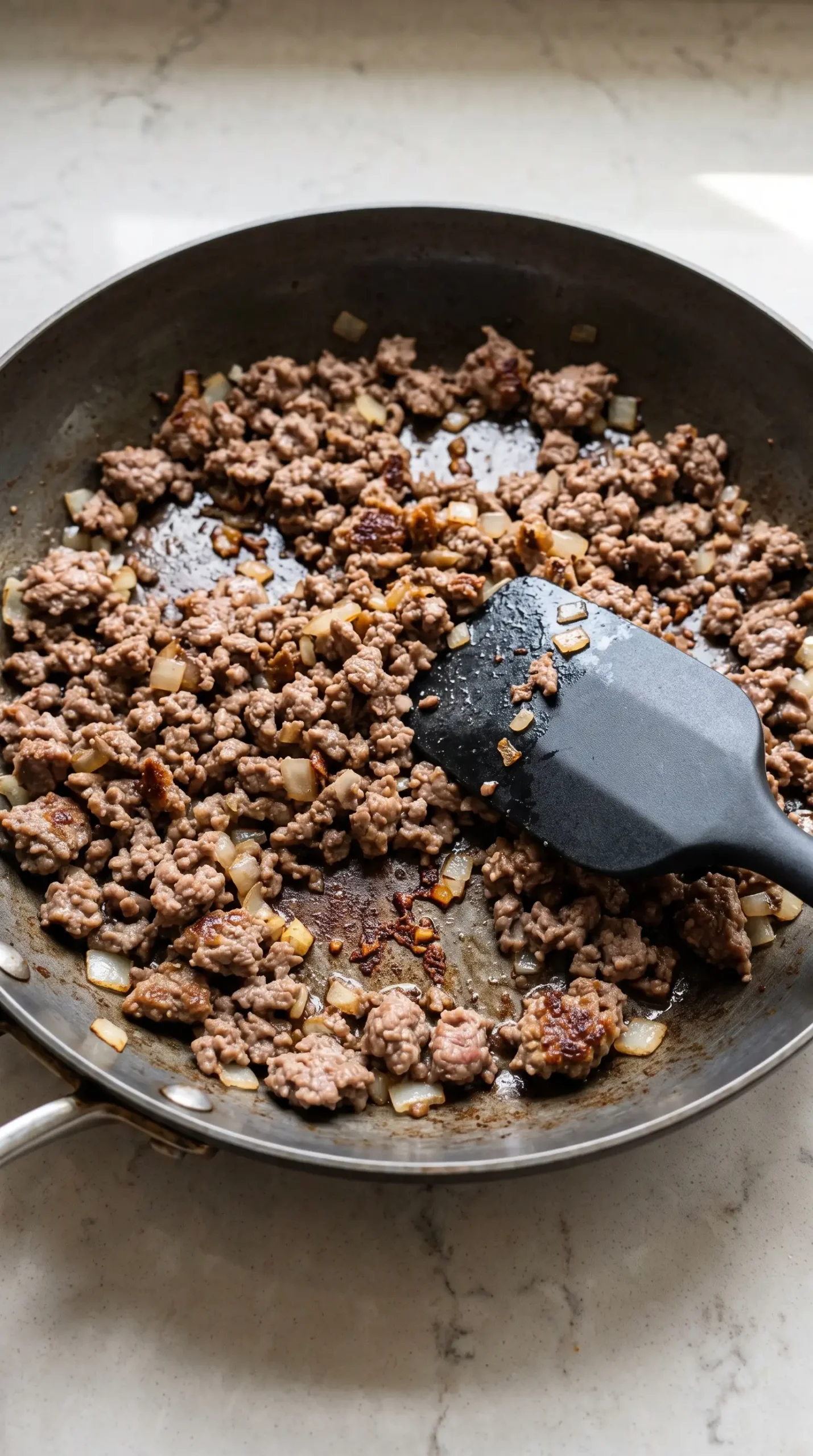
Ground beef benefits from direct contact with the hot skillet before any liquid enters the pan. Breaking it into small pieces while it cooks with diced onion creates an even texture, and draining excess grease prevents the finished cheesy taco rice skillet from feeling oily beneath the melted cheese.
Long-Grain Rice Controls the Texture
Long-grain white rice suits this skillet because it cooks within the stated covered simmer and long-grain white rice remains fluffy and separate after cooking. Its dry, uncooked form is essential because the measured broth and tomato mixture is designed to hydrate the rice inside the pan.
Substituting another rice variety changes how quickly liquid is absorbed. Brown rice generally needs a longer cooking period and additional moisture, while precooked rice requires far less liquid and should be folded in only after the seasoned beef mixture has reduced.
| Rice option | Liquid approach | Cooking adjustment |
|---|---|---|
| Long-grain white rice | Use the stated broth and tomato mixture | Simmer covered as directed |
| Brown rice | Increase liquid as needed | Allow a longer covered cooking time |
| Precooked rice | Reduce the added broth substantially | Stir in near the end only to heat through |
Measuring the rice and broth accurately matters more than frequent checking. Too little liquid leaves firm centers, while an excessive amount can make the skillet loose and prevent the grains from separating properly after resting.
Covered Steam Finishes the Rice Evenly
Once the seasoned liquid returns to a boil and the rice is stirred in, reducing the heat protects the bottom of the skillet from scorching. The mixture should maintain gentle heat under the lid without bubbling so aggressively that liquid escapes around the edges.
Keeping the cover closed traps steam above the rice. Lifting it repeatedly releases heat and moisture, which can leave the upper grains firm even when the bottom layer appears cooked.
After the covered simmer, the rice should look plump and most of the visible liquid should be absorbed. A small amount of moisture is useful because the skillet continues to settle while the cheese melts and during the brief rest before serving.
Melted Cheese Creates the Skillet Finish
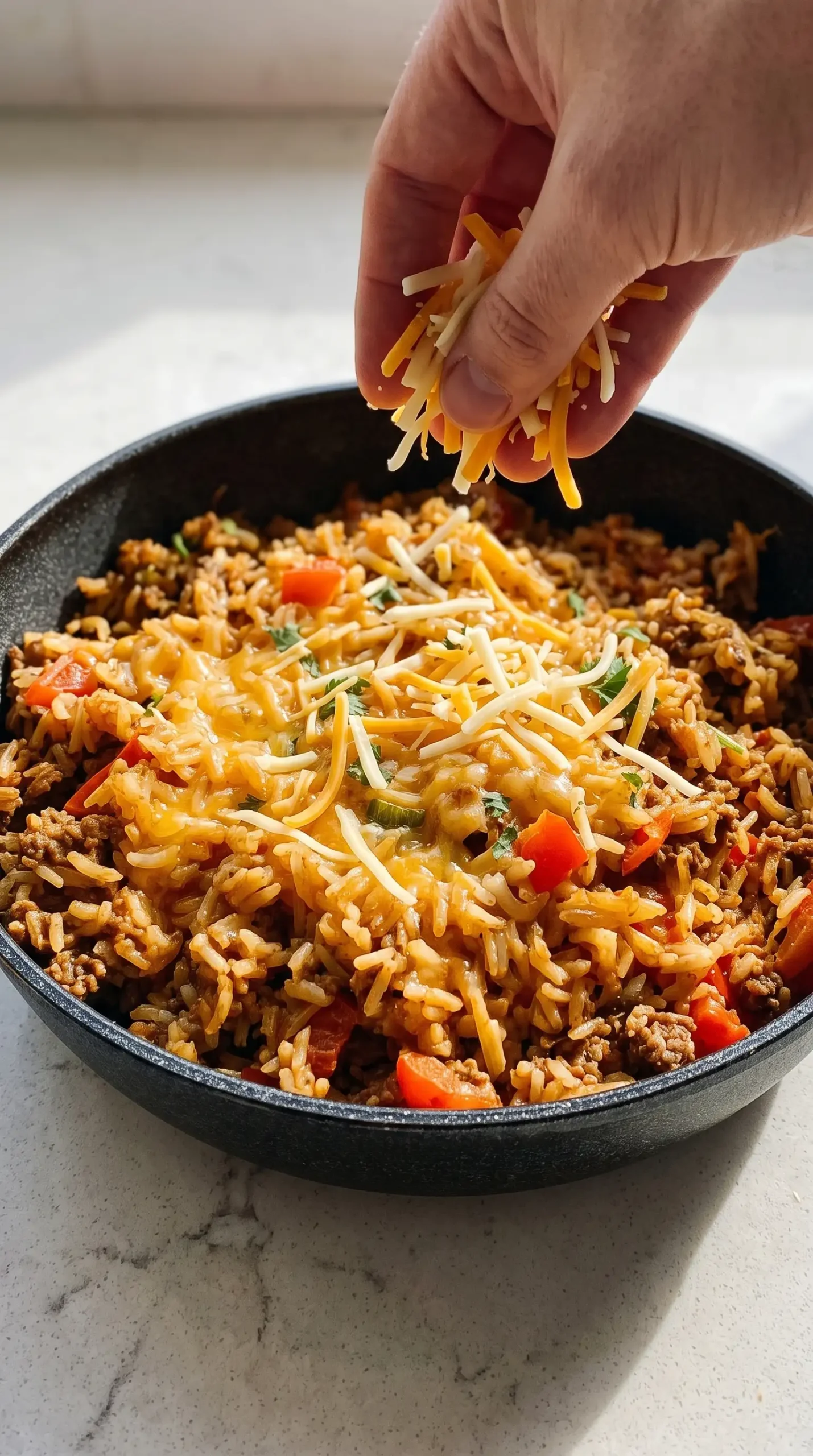
Sprinkling shredded cheese evenly across the surface allows it to soften without vigorous stirring. Cheddar provides a stronger savory flavor, Monterey Jack melts smoothly, and a combination of the two gives cheesy taco rice both character and an even, creamy layer.
Cheesy Taco Rice Mistakes That Disrupt the Texture
Several avoidable errors can affect the rice, beef, or cheese even when the ingredient proportions remain correct. Most problems come from changing the heat, moisture, or covered cooking environment before the grains have finished absorbing liquid.
- Skipping the drain: Excess beef grease can collect around the rice and create a heavy finish.
- Rushing the boil: Adding rice before the broth mixture heats fully can produce uneven cooking.
- Opening the lid: Escaping steam may leave firm grains near the top of the skillet.
- Using high heat: An aggressive simmer can scorch the bottom before the rice becomes tender.
- Changing the rice: Different varieties require their own liquid ratios and cooking times.
- Stirring the cheese deeply: Excess movement can compress the tender rice into a dense texture.
Should the rice remain slightly firm after the simmer, a small splash of broth and a few additional covered minutes may help it finish. When excess liquid remains, gentle uncovered heat can encourage evaporation, but the skillet needs close attention to avoid drying at the bottom.
Visible Cues Matter More Than Constant Stirring
A properly cooked skillet shows tender grains, evenly distributed beef, and little free liquid around the edges. Leaving the pan undisturbed for five minutes after the cheese melts allows residual moisture to redistribute, giving the cheesy taco rice a more settled texture when spooned onto plates.
Fresh Toppings Balance the Rich Skillet
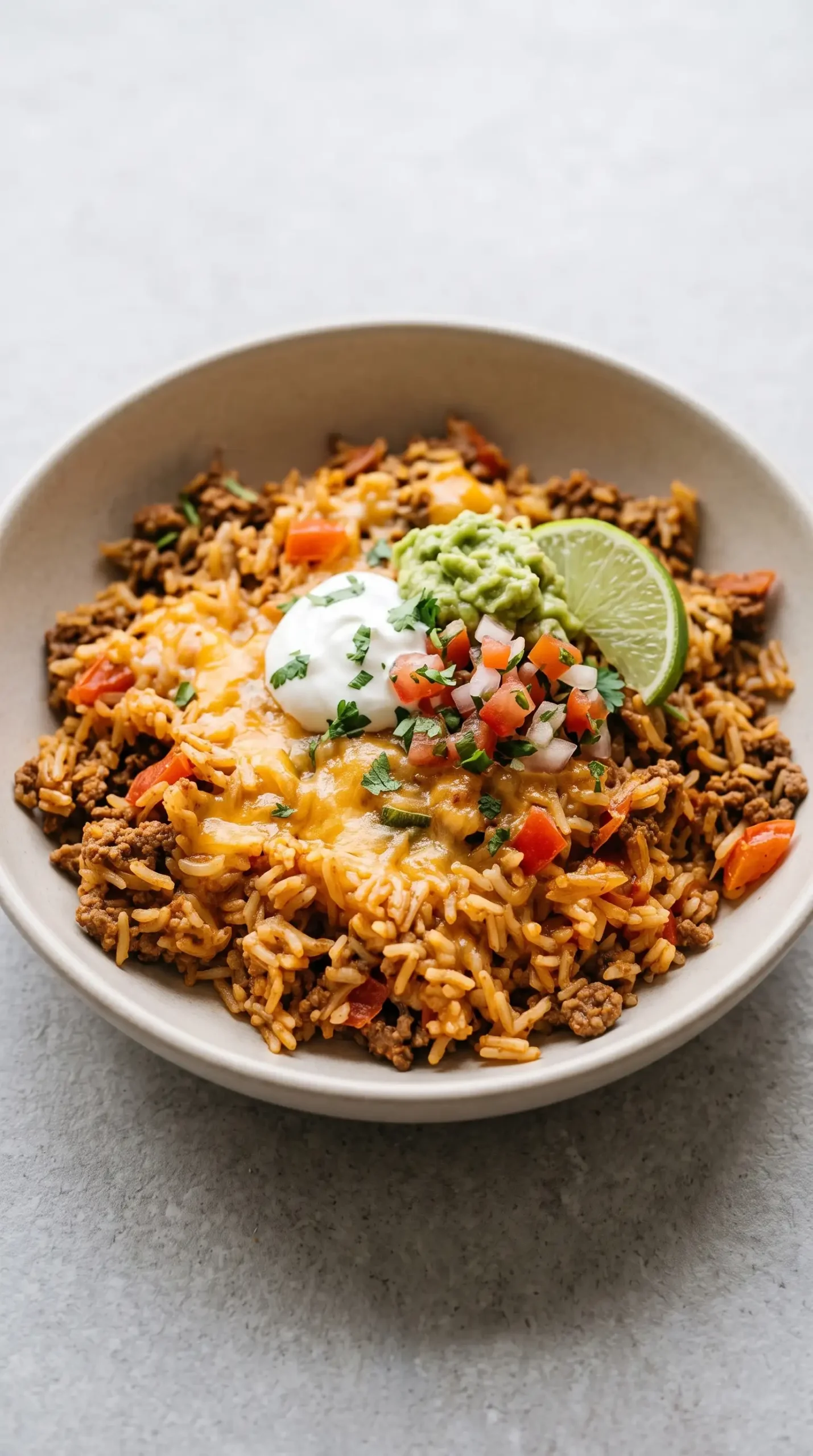
Cool sour cream or guacamole softens the spice and adds contrast to the warm beef and rice. These toppings work best when added after serving so they remain distinct instead of melting completely into the skillet.
Bright pico de gallo, chopped cilantro, sliced green onions, and lime wedges bring freshness to the deeper tomato and taco-seasoning flavors. Setting several choices on the table also makes the meal easier to adapt for diners with different preferences.
Simple sides should support the skillet without competing with its substantial texture. A green salad adds crispness, while tortilla chips provide a crunchy option for scooping small portions of rice, beef, and melted cheese.
Flexible Variations Keep the Core Method Intact
Ground turkey can replace the beef for a lighter variation, provided it is cooked fully with the onion before the seasoning and liquid are added. A plant-based crumbled alternative can follow the same general approach when its package directions support skillet browning.
Vegetarian cheesy taco rice can use black beans with sautéed bell peppers in place of meat. Because drained beans carry some moisture and do not require the same browning time as beef, the broth may need a modest reduction to preserve the intended rice texture.
| Variation | Main change | Related adjustment |
|---|---|---|
| Lighter skillet | Use ground turkey | Choose low-sodium broth if desired |
| Vegetarian skillet | Use black beans and bell peppers | Reduce broth slightly if the mixture is moist |
| Hotter skillet | Use hot Rotel or cayenne | Add cooling toppings at serving |
| Extra vegetables | Add corn, peppers, or green chiles | Keep additions moderate to protect the liquid balance |
Extra corn, diced peppers, or chopped green chiles can add color and texture without changing the identity of the meal. Additions should remain moderate because a crowded skillet may cook less evenly and vegetables with substantial moisture can alter the broth-to-rice balance.
Spice Level Can Change Without Losing Taco Flavor
Mild taco seasoning and standard Rotel create a family-friendly level of warmth, while hot Rotel or a small pinch of cayenne increases the heat. Serving spicy additions separately offers better control when children or spice-sensitive diners share the same cheesy taco rice skillet.
Leftovers Need Prompt Cooling and Airtight Storage
Cooked rice should be cooled and moved into an airtight container within two hours. Refrigerated portions keep for three to four days, making the skillet practical for planned lunches or a second dinner later in the week.
Freezer storage works best when the ground beef taco rice is divided into meal-sized containers before freezing. Portions may remain frozen for up to two months, and smaller containers thaw more evenly than one deep container holding the entire batch.
Overnight thawing in the refrigerator provides the most predictable reheating. Keeping toppings such as sour cream, avocado, guacamole, pico de gallo, and cilantro separate preserves their fresh texture and prevents watery leftovers.
Gentle Reheating Protects the Rice
A covered skillet with a splash of broth restores moisture to chilled or frozen portions without flooding the grains. Low heat and occasional folding help the cheese, beef, and rice warm evenly, while fresh cilantro or lime can be added afterward to brighten the reheated cheesy taco rice.
Portioning Supports Family Meals and Meal Prep
Serving directly from the skillet keeps a casual dinner simple, while dividing the cooked mixture before adding fresh toppings creates convenient meal-prep portions. Pack cooling garnishes separately and include tortilla chips only at serving time so they stay crisp.
Steady Heat Makes Cheesy Taco Rice Work
Gentle bubbling beneath a closed lid gives the dry rice enough heat and trapped moisture to become tender without scorching. That controlled simmer is the central judgment behind the entire skillet: browned beef establishes flavor, the broth and tomatoes hydrate the grains, and an even cheese layer finishes the meal without disturbing its structure.
A brief rest completes the process by allowing the remaining moisture to settle through the pan. Spoonfuls then hold together comfortably while still showing distinct grains, seasoned beef, tomatoes, and melted cheese.
Rice Texture and Substitution Questions Answered
Can brown rice replace long-grain white rice?
Brown rice needs more liquid and a longer cooking period than the white rice specified here. For greater predictability, cook it separately and fold it into the seasoned beef mixture before adding the cheese.
Can cheesy taco rice be made with precooked rice?
Precooked rice can be used, but the broth must be reduced because the grains no longer need full hydration. Let the beef, tomatoes, tomato paste, and seasoning cook together, then add the rice near the end and warm it through before topping with cheese.
Why is the rice still firm after simmering?
Firm grains usually indicate that steam escaped, the heat was too low, or the skillet needed slightly more moisture. Add a small splash of broth, cover the pan again, and continue cooking gently until the centers soften.
Can an oven-safe skillet go under the broiler?
After the rice has finished on the stovetop, an oven-safe skillet may be placed briefly under the broiler to brown the cheese. Watch continuously because shredded cheese can move from lightly browned to scorched very quickly.
Which toppings are best for a mild version?
Sour cream, guacamole, avocado, mild pico de gallo, cilantro, and lime all complement a gently seasoned skillet. Hot sauce, jalapeños, or cayenne can be offered separately for anyone who wants more heat.
How can the skillet be kept from becoming greasy?
Drain excess fat after browning the ground beef and onion, then return the pan to the heat before adding garlic and taco seasoning. Using a moderate amount of well-melting cheese also helps preserve a balanced texture.
Cheesy Taco Rice Skillet Dinner with Beef and Tomatoes
Cheesy Taco Rice Skillet Dinner with Beef and Tomatoes is a hearty one-pan meal with tender rice, savory beef, and a creamy melted cheese topping. It is an easy, comforting option for busy weeknight dinners.
Ingredients
Method
Cooking
- Warm olive oil in a large skillet over medium-high heat. Add the ground beef and diced onion, cooking for 8-10 minutes until the beef is cooked through and the onion is translucent. Drain any excess grease.
- Mix the minced garlic and taco seasoning into the beef mixture and cook for 30 seconds until combined.
- Add the beef broth, diced tomatoes with green chilies, and tomato paste. Stir well and bring the mixture to a boil.
- Stir the dry long-grain white rice into the boiling mixture, then return it to a boil.
- Place a lid on the skillet, lower the heat to medium-low or low, and cook for 15 minutes without lifting the lid.
- Spread the shredded cheese over the rice mixture, cover the skillet again, and cook for 5 minutes until the cheese has melted.
- Take the skillet off the heat and allow it to rest for 5 minutes before serving with optional taco toppings such as sour cream, guacamole, pico de gallo, or chopped cilantro.
Notes
Keep the skillet covered while the rice simmers so the steam is retained and the long-grain rice cooks evenly.