
From morning breakfasts to evening dinners, Tasteza Recipes offers quick and easy recipe ideas, featuring everything from wholesome meals to delicious desserts for every moment and every occasion.


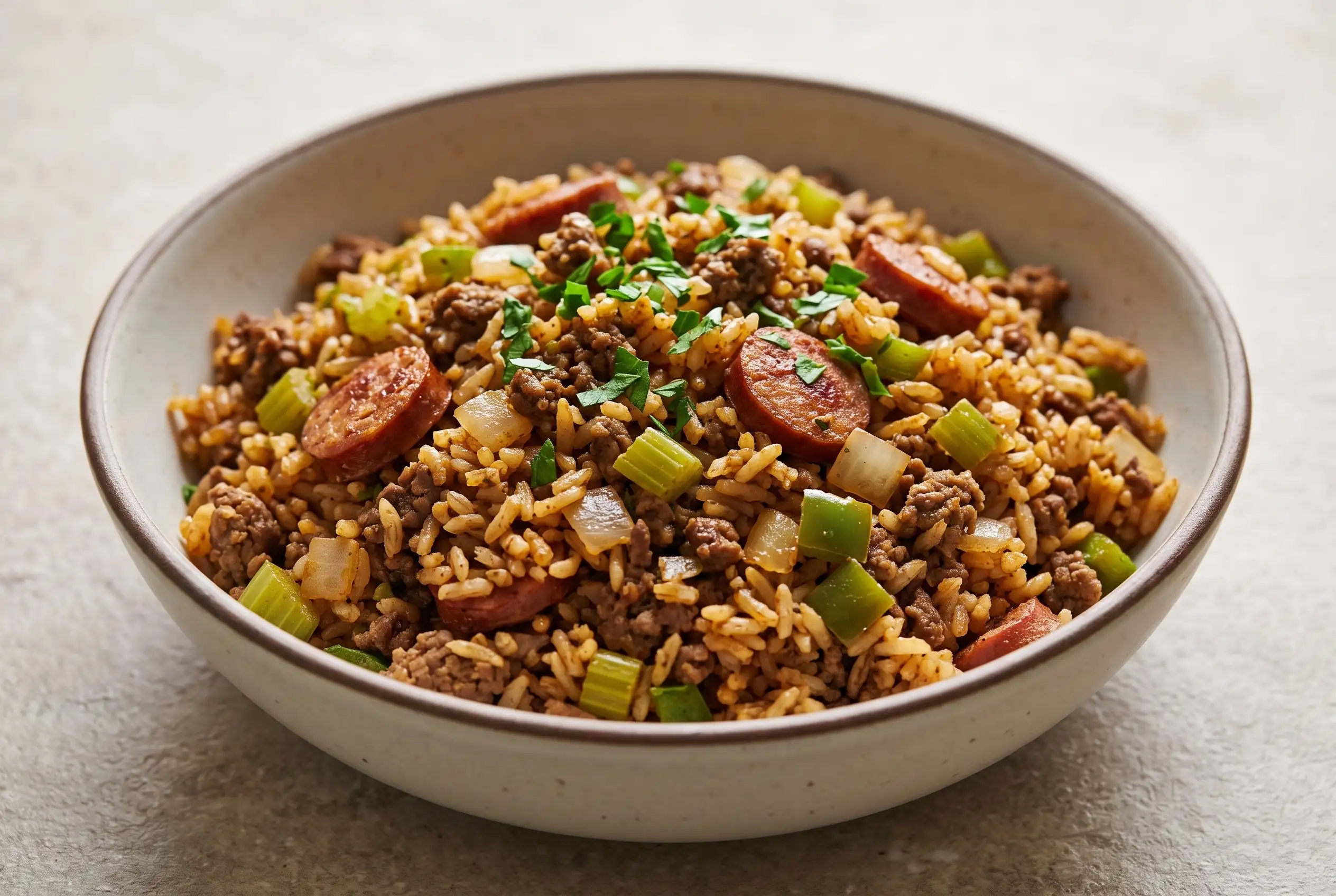
Cajun Dirty Rice Skillet brings together browned meat, seasoned rice, and the classic Cajun vegetable trio in a single pan for a hearty meal built around savory depth. The combination of rice, spicy sausage, ground beef, and bold spices creates the kind of comfort food that works for weeknight dinners, gatherings, and leftovers.
Many cooks look for a dependable cajun dirty rice recipe because the dish uses familiar ingredients while delivering layered flavor. The skillet approach keeps the cooking process practical, with the browned meat, vegetables, and rice sharing the same flavorful cooking environment.
Why Cajun Dirty Rice Skillet Works for Busy Meals
Simple preparation makes the dish appealing when a filling meal needs to come together without multiple pans. The one skillet dirty rice approach reduces cleanup while allowing the rice to absorb the flavors created during browning.
Ground beef and spicy sausage create a substantial base, while diced onions, celery, and green bell peppers provide the traditional vegetable foundation associated with the dish. These ingredients work together before the rice is added, giving each bite a balanced savory character.
Ground beef and rice meals benefit from careful browning before the grains cook, which helps build a savory base and keeps the finished dish satisfying. A practical example of this style is a one-pan ground beef and rice dinner where the main ingredients come together in a streamlined skillet format.
- Weeknight advantage: A single skillet handles the main cooking stages and keeps the process organized.
- Gathering option: The hearty texture and generous style make it suitable for potlucks or weekend meals.
- Leftover strength: Proper storage keeps the cooked rice useful for future servings.
The Sausage and Rice Choices That Shape Cajun Dirty Rice Skillet
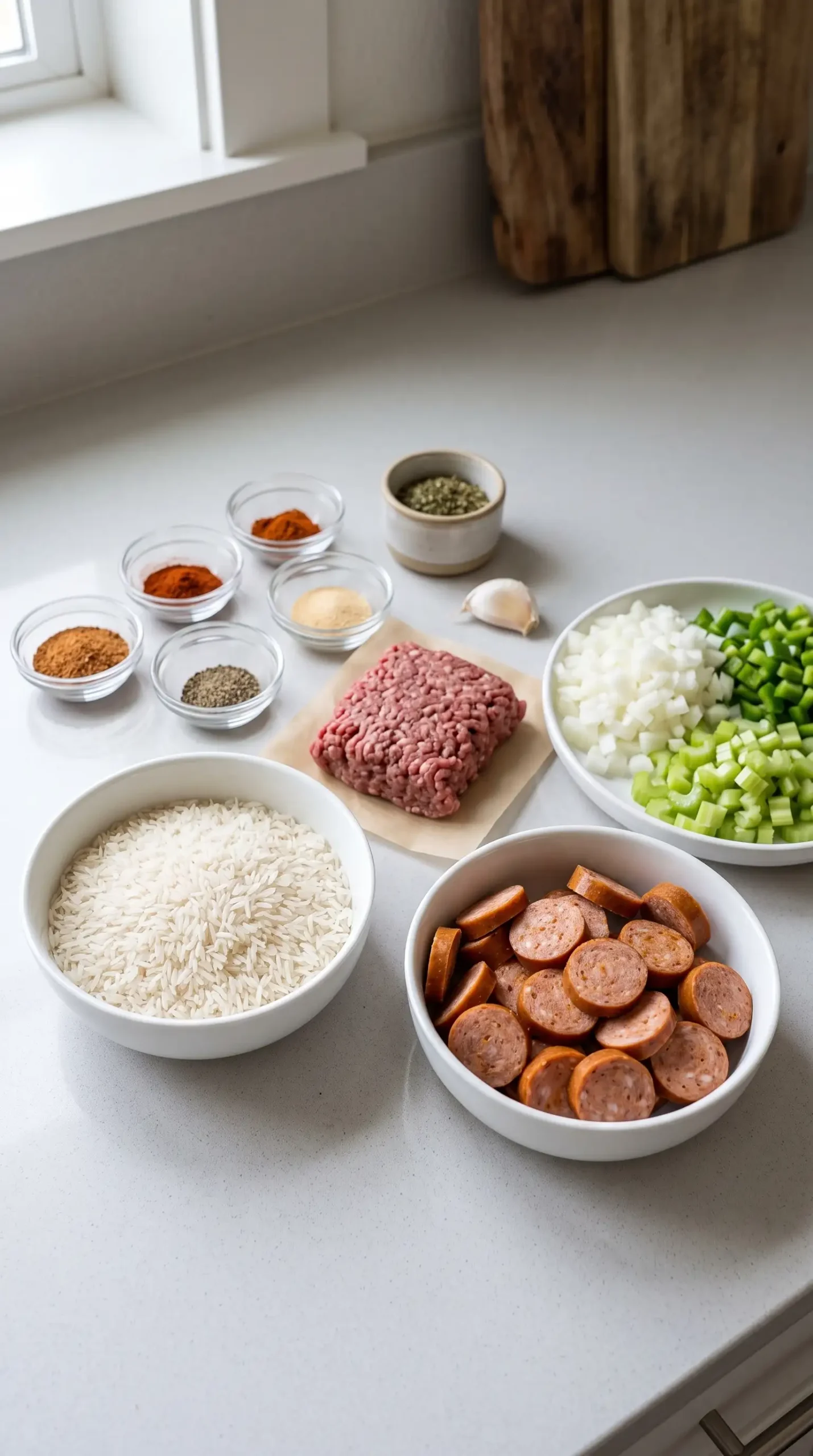
Ingredient selection has the biggest influence on the personality of a Cajun Dirty Rice Skillet. Long-grain white rice is the foundation because it cooks into the characteristic crumbly texture expected from dirty rice.
Spicy sausage contributes seasoning and richness, while ground beef adds another layer of browned flavor. Chicken livers remain optional, allowing cooks to choose whether they want the deeper traditional element without making it essential to the dish.
| Ingredient choice | Role in the dish | Cooking consideration |
|---|---|---|
| Long-grain white rice | Creates the grain base and absorbs pan flavors | Rinse before cooking and allow it to steam fully |
| Spicy sausage | Adds smoky and savory seasoning | Heat level depends on the sausage selected |
| Chicken livers | Provides an optional traditional richness | Chop finely when included for even cooking |
Another factor is the seasoning blend. Cajun seasoning, paprika, cayenne pepper, garlic powder, dried oregano, and black pepper shape the final flavor, so adjustments should focus on personal heat preference while keeping the Cajun profile recognizable.
Seasoning Balance Inside a Cajun Dirty Rice Recipe
Balanced spices allow cajun dirty rice recipe results to taste bold without overwhelming the meat and rice. Cayenne controls the heat, while paprika and herbs help create a rounded flavor.
Careful seasoning also matters because sausage can already contain salt and spices. Small adjustments during cooking help maintain control over the finished skillet.
Skillet Control That Builds Better Dirty Rice Texture
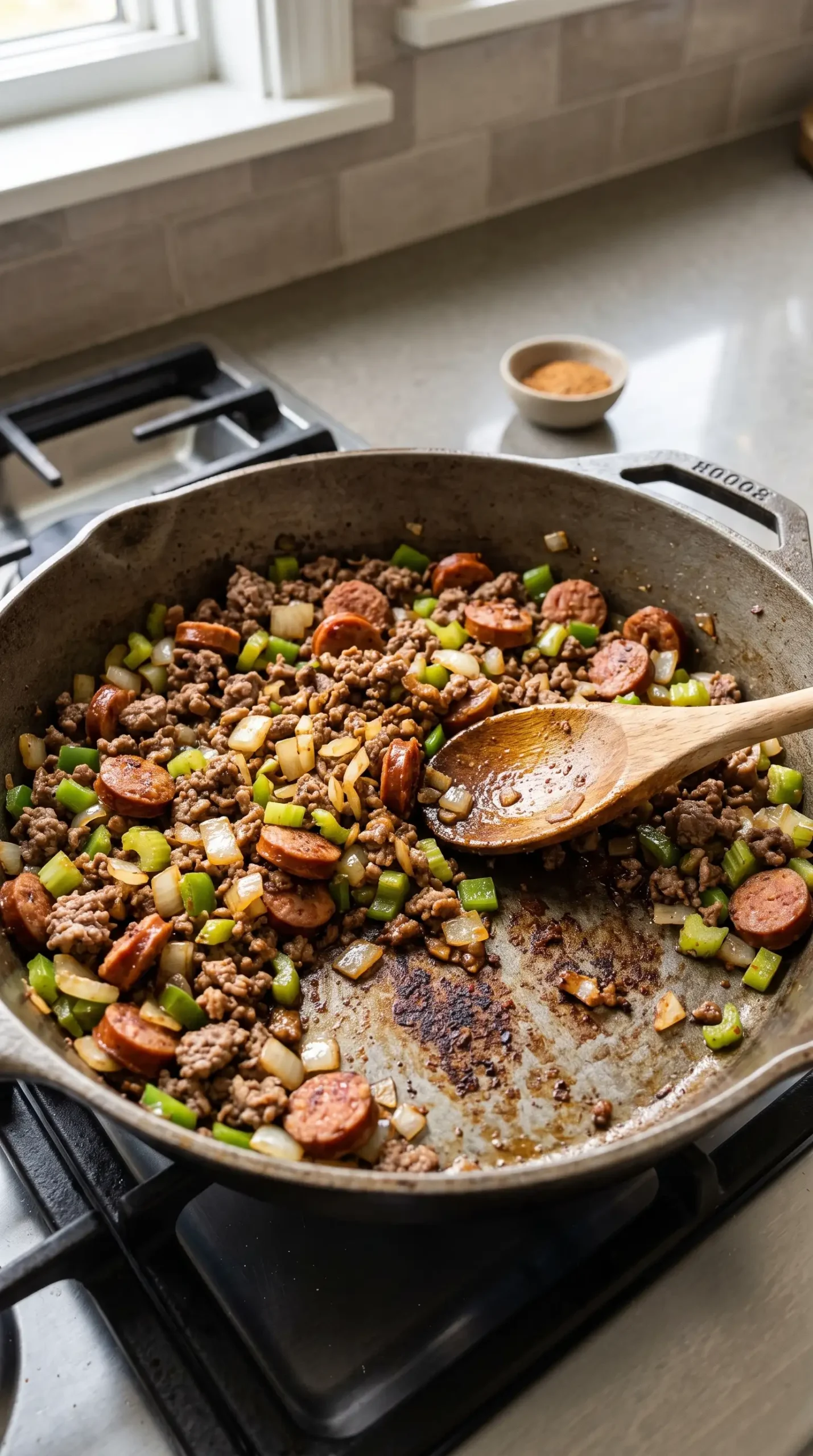
Proper heat management determines whether the rice develops the intended texture. Browning the meat thoroughly creates flavorful browned bits in the skillet, and those pieces become part of the liquid that cooks the rice.
The deeper flavor from browned meat comes from the Maillard reaction, a heat-driven process that creates savory flavor compounds as proteins and sugars react during browning.
During simmering, a covered skillet traps steam and allows the grains to absorb water or chicken broth evenly. Keeping the lid closed is important because escaping steam can affect how consistently the rice cooks.
After cooking, a short covered rest gives the rice time to settle. Gentle stirring afterward helps separate the grains without breaking them apart.
| Cooking stage | Important action | Reason it matters |
|---|---|---|
| Browning | Cook meat until well browned | Builds deeper flavor before liquid is added |
| Simmering | Use low heat with a tight lid | Supports even rice absorption |
| Resting | Keep covered before serving | Helps texture become more uniform |
Serving Cajun Dirty Rice Skillet Beyond the Pan
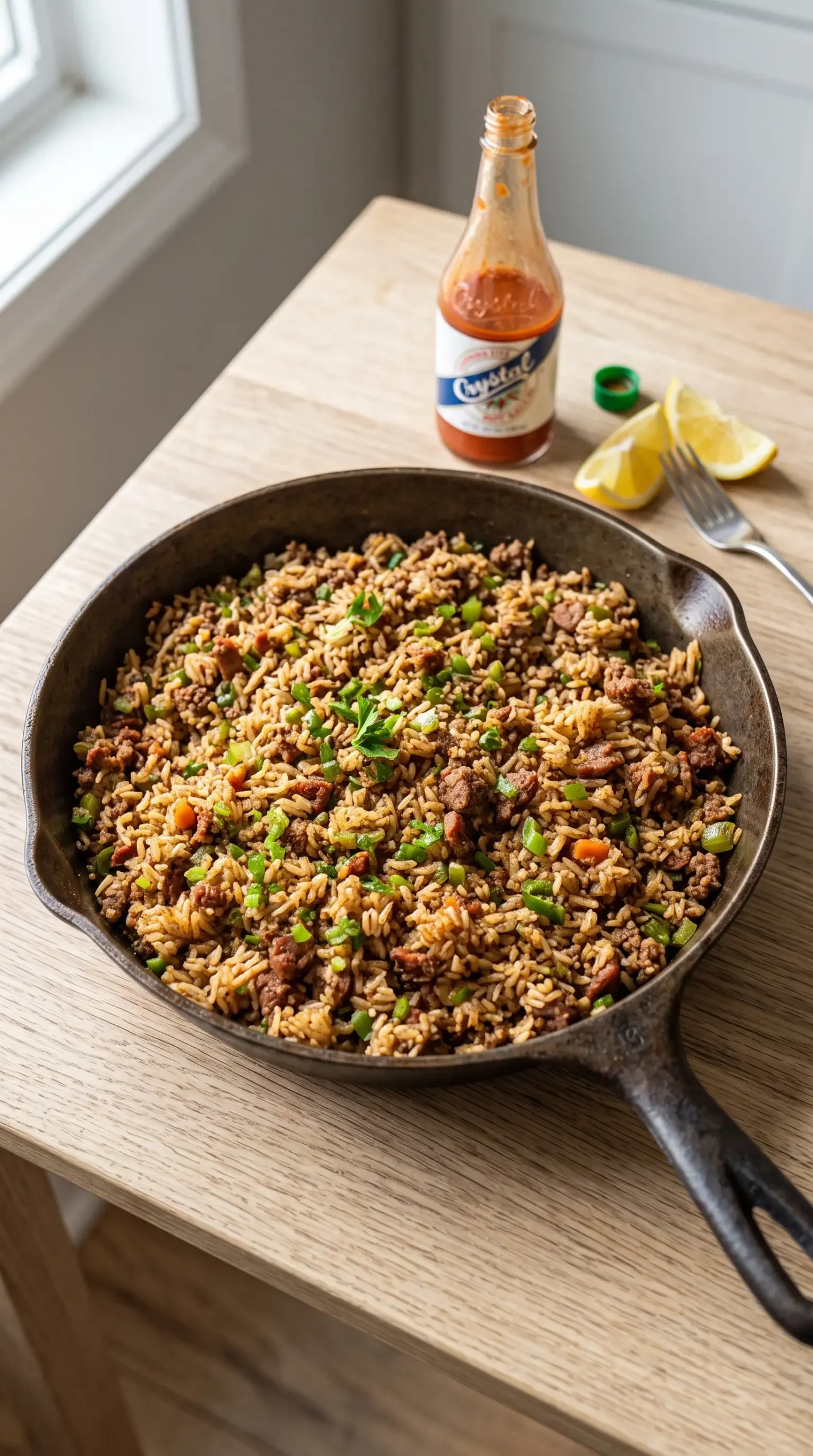
Hot portions served directly from the skillet highlight the texture of the rice and the savory mixture of meat and vegetables. Lemon wedges or hot sauce can be offered separately for brightness or extra spice.
Storage Practices That Protect Leftover Dirty Rice
Cooling leftovers properly helps maintain quality after the meal. Cooked rice should cool to room temperature for up to one hour before it is moved into an airtight container for refrigeration.
Refrigerated portions can be kept for up to four days, while sealed containers in the freezer can preserve the dish for longer storage. Thawing frozen portions overnight in the refrigerator makes reheating easier.
Gentle reheating prevents the rice from becoming dry. Adding a splash of broth or water and covering the skillet while warming helps restore moisture.
Make-Ahead Moves for Cajun Dirty Rice Skillet
Advance preparation can focus on the parts that hold well before cooking. Browning the meat and chopping the vegetables ahead of time allows the rice to be cooked closer to serving.
Variations That Keep Dirty Rice with Sausage and Beef Flexible
Different ingredient choices can adjust the style while keeping the dish recognizable. Turkey sausage and lean ground turkey create a lighter approach while maintaining the same spice direction.
Vegetarian adaptations can replace sausage with smoked tempeh and leave out chicken livers while increasing smoked paprika to maintain a savory profile. The structure of the rice and seasoning remains central.
Another variation uses chicken broth and a splash of cream at the end for a richer texture. Spice levels should still be adjusted so the Cajun character remains clear.
Cajun Dirty Rice Skillet Mistakes That Change the Result
Common errors often happen when cooking order or heat control is ignored. Avoiding these problems keeps the rice texture and flavor closer to the intended result.
- Early liquid addition: Adding liquid before the meat browns can reduce the depth created by the skillet.
- Frequent lid lifting: Opening the cover during simmering releases steam and can lead to uneven rice.
- Rushed resting: Serving immediately after cooking can prevent the texture from settling.
Another mistake is skipping careful heat adjustment. A low simmer after covering protects the rice from scorching while allowing the liquid to absorb properly.
Finely chopped chicken livers should be added only when using them so they cook evenly with the rest of the mixture. Small preparation details make a noticeable difference in the finished pan.
Pairings That Complete a Spicy Rice Meal
Fresh sides provide contrast to the rich flavors of dirty rice with sausage and beef. A simple green salad and crusty bread create a balanced meal alongside the skillet.
Texture Checks Before Serving Cajun Dirty Rice Skillet
Before serving, look for tender rice grains that have absorbed the cooking liquid while keeping a slightly crumbly structure. The meat and vegetables should remain evenly distributed throughout the skillet.
Recipe Details Worth Remembering When Cooking Dirty Rice
Reliable results come from respecting the order of flavor development. Browning, seasoning, simmering, and resting each contribute to the finished Cajun Dirty Rice Skillet.
Browned Meat and Rested Rice Define Cajun Dirty Rice Skillet
Browned meat creates the foundation that separates a deeply flavored Cajun Dirty Rice Skillet from plain seasoned rice. The skillet captures those savory flavors before the rice absorbs the cooking liquid and spices.
Rested rice completes the texture by allowing steam to distribute evenly. When browning and moisture control are handled carefully, the dish delivers a satisfying combination of crumbly grains, seasoned meat, and classic Cajun character.
Cajun Dirty Rice Skillet Questions About Heat and Storage
Can Cajun Dirty Rice Skillet be made less spicy?
Heat can be reduced by lowering the cayenne pepper amount or choosing a milder sausage. The remaining seasonings can stay in place to preserve the overall Cajun flavor.
Does Cajun Dirty Rice Skillet require chicken livers?
Chicken livers are optional and can be omitted without removing the main structure of the dish. The ground beef, sausage, vegetables, rice, and seasonings still create a complete skillet meal.
How can leftover Cajun Dirty Rice Skillet stay moist?
Reheat portions slowly in a skillet with broth or water added to restore moisture. Covering the pan while warming helps prevent the rice from drying.
Can brown rice replace long-grain white rice?
Brown rice can be used, but it requires different liquid amounts and a longer cooking period. Following the package guidance for brown rice helps adjust the process.
What sausage works well in Cajun Dirty Rice Skillet?
Spicy Andouille or smoked sausage fits the flavor style well. Other sausage choices can work, but the cayenne and paprika may need adjustment to maintain balance.
Cajun Dirty Rice Skillet with Spicy Sausage and Beef
Cajun Dirty Rice Skillet is a hearty one-pan dish with savory browned meat, tender rice, and bold Cajun seasoning. It is an easy, comforting meal with a rich texture and plenty of flavor for family dinners.
Ingredients
Method
Preparation
- Rinse the long-grain white rice with cold water until the water becomes clear, then drain it well.
- Heat a large cast-iron skillet over medium-high heat.
Cooking
- Place the ground beef and spicy sausage in the skillet, breaking the meat into small pieces as it cooks until browned.
- Add the diced onion, celery, and green bell pepper to the skillet and cook until the vegetables become tender.
- Mix in the chopped chicken livers, if using, and continue cooking until browned and incorporated.
- Add the Cajun seasoning, paprika, cayenne pepper, garlic powder, dried oregano, and black pepper, stirring to season the meat and vegetables.
- Add the rinsed rice and stir briefly so the grains are coated with the seasoned mixture.
- Pour the chicken broth or water into the skillet and bring the mixture to a simmer.
- Cover the skillet with a tight-fitting lid, lower the heat, and cook for about 20 minutes until the rice is tender and the liquid is absorbed.
Resting and Serving
- Remove the skillet from the heat, keep it covered, and allow the dirty rice to rest for 5 minutes.
- Gently fluff the rice before serving.
Notes
Adjust the cayenne pepper and sausage selection to change the level of heat in the dish.