
From morning breakfasts to evening dinners, Tasteza Recipes offers quick and easy recipe ideas, featuring everything from wholesome meals to delicious desserts for every moment and every occasion.


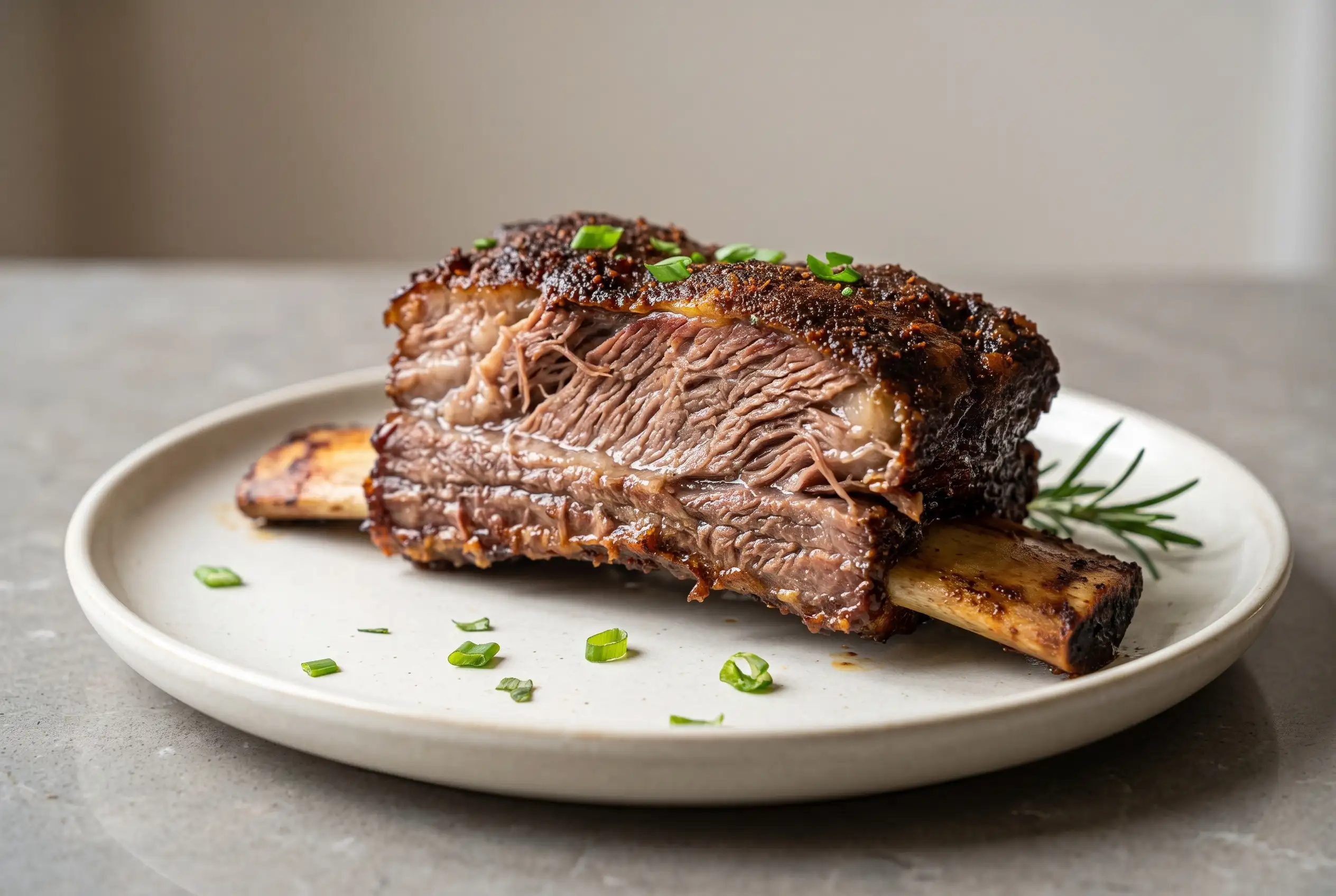
Beef ribs recipe instructions are built around a simple promise: rich flavor, moist meat, and a tender texture created through patient oven cooking. A low roasting temperature, a balanced spice coating, and careful wrapping help turn beef ribs into a dependable meal for family dinners or larger gatherings.
Many cooks look for an oven approach that delivers slow cooked beef ribs without complicated equipment. The combination of common seasonings and controlled heat creates a practical way to prepare flavorful ribs while leaving most of the cooking time to the oven.
Why Beef Ribs Recipe Works for Gatherings
Successful rib dishes depend on managing texture as much as seasoning. The long roasting process allows the connective tissue in the meat to soften, creating the tender bite people expect from well-prepared ribs.
Home cooks also appreciate the flexible preparation. A short trimming process, a generous coating of spices, and a covered oven roast create a meal that fits both relaxed dinners and occasions where several people are being served.
Beyond convenience, the approach keeps the focus on dependable cooking choices. Bone-in beef ribs, a flavorful rub, and a resting period after roasting work together to preserve moisture and develop a deeper finished flavor.
Choosing Beef Ribs for Tender Oven Results
Bone-in beef ribs are the preferred choice because the bone helps maintain moisture during the extended roast and contributes to the overall flavor. Select high-quality ribs when possible, especially when planning to serve individual portions between the bones.
Brown Sugar Paprika Rub Decisions for Beef Ribs Recipe
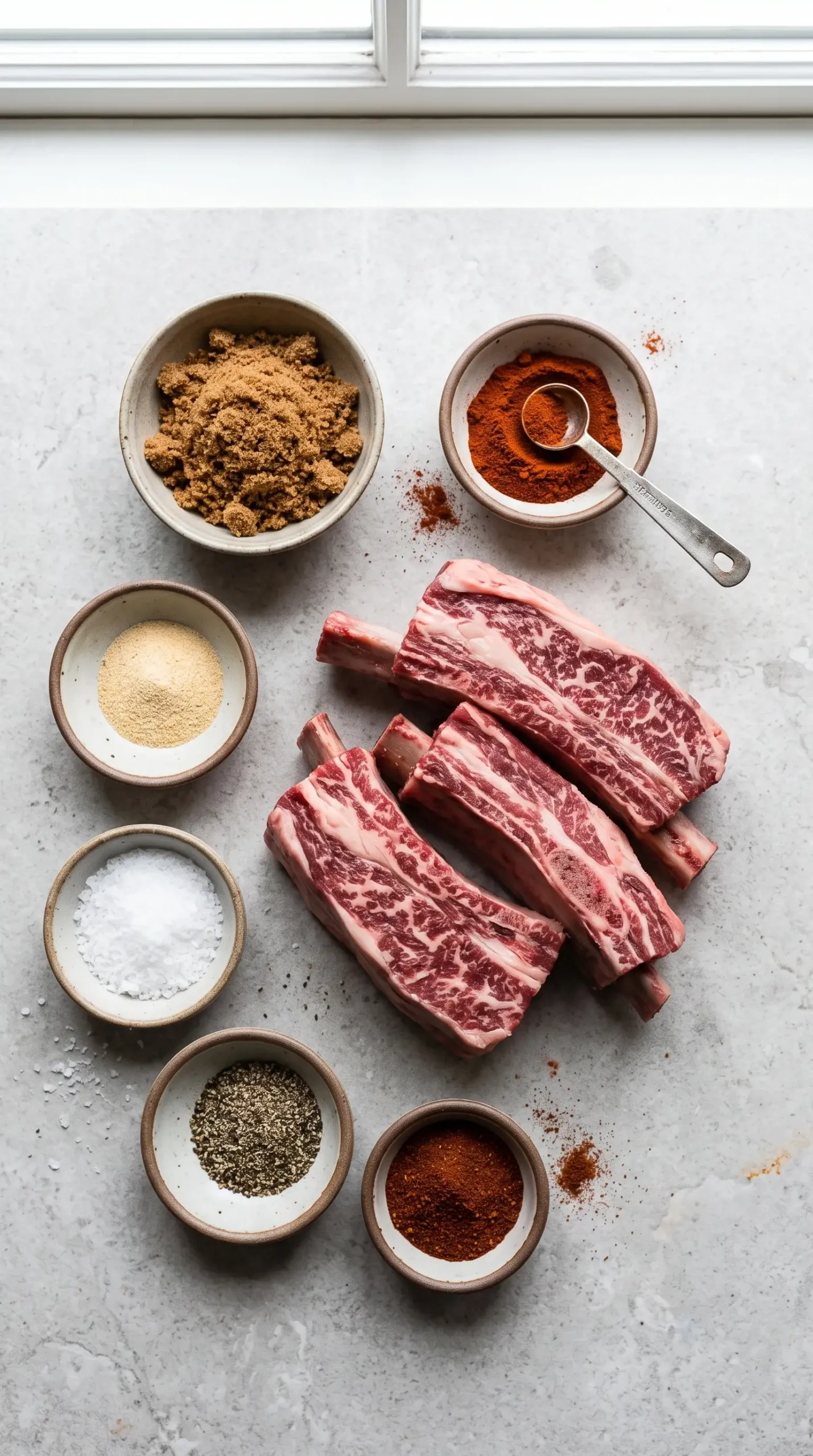
The seasoning blend shapes the character of the finished ribs. Brown sugar and paprika create the foundation of the rub, while garlic powder, salt, black pepper, and chili powder build a savory balance around the meat.
Applying the spice mixture before cooking gives the flavors time to settle onto the surface. The coating also helps create a flavorful exterior during the slow roasting process without requiring a complicated preparation.
Small adjustments can change the personality of the dish. Increasing chili powder creates more heat, adding smoked paprika brings a deeper smoky note, and orange zest can introduce a brighter citrus element while keeping the original seasoning approach intact.
| Seasoning choice | Cooking effect | Best use |
|---|---|---|
| Brown sugar | Adds sweetness and supports surface caramelization | Use as part of the base rub |
| Paprika | Builds color and mild pepper flavor | Combine with other dry spices |
| Chili powder | Introduces additional spice | Increase for a hotter variation |
Foil Wrapping and Oven Temperature Control for Slow Cooked Beef Ribs
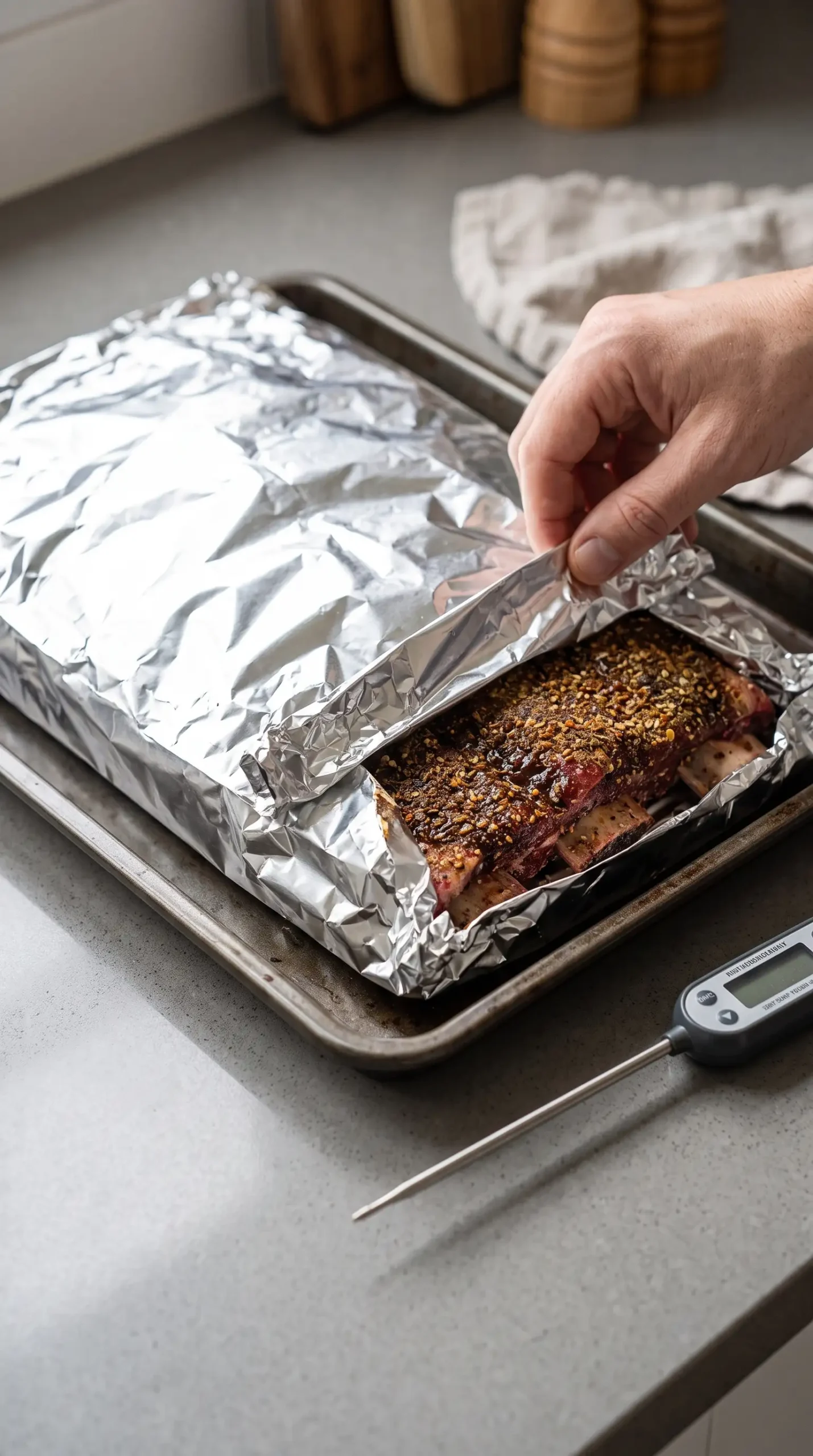
Temperature management is the key execution point for this oven baked beef ribs recipe. Keeping the oven at a low setting allows time for the meat to become tender while preventing the outside from drying too quickly.
Wrapping the ribs in foil creates a protected cooking environment. Steam remains close to the meat, helping maintain moisture throughout the long roast and supporting the soft texture associated with slow cooked beef ribs.
A thermometer provides an important check during cooking. Reaching an internal temperature of 195°F indicates that the connective tissue has broken down enough for a tender result. A short rest afterward allows the juices to settle before serving.
- Temperature control: Maintain the low oven setting instead of increasing heat to shorten cooking.
- Moisture protection: Keep ribs wrapped during the roast to trap steam.
- Texture check: Use internal temperature as a guide for tenderness.
Serving Styles for Oven Baked Beef Ribs Recipe
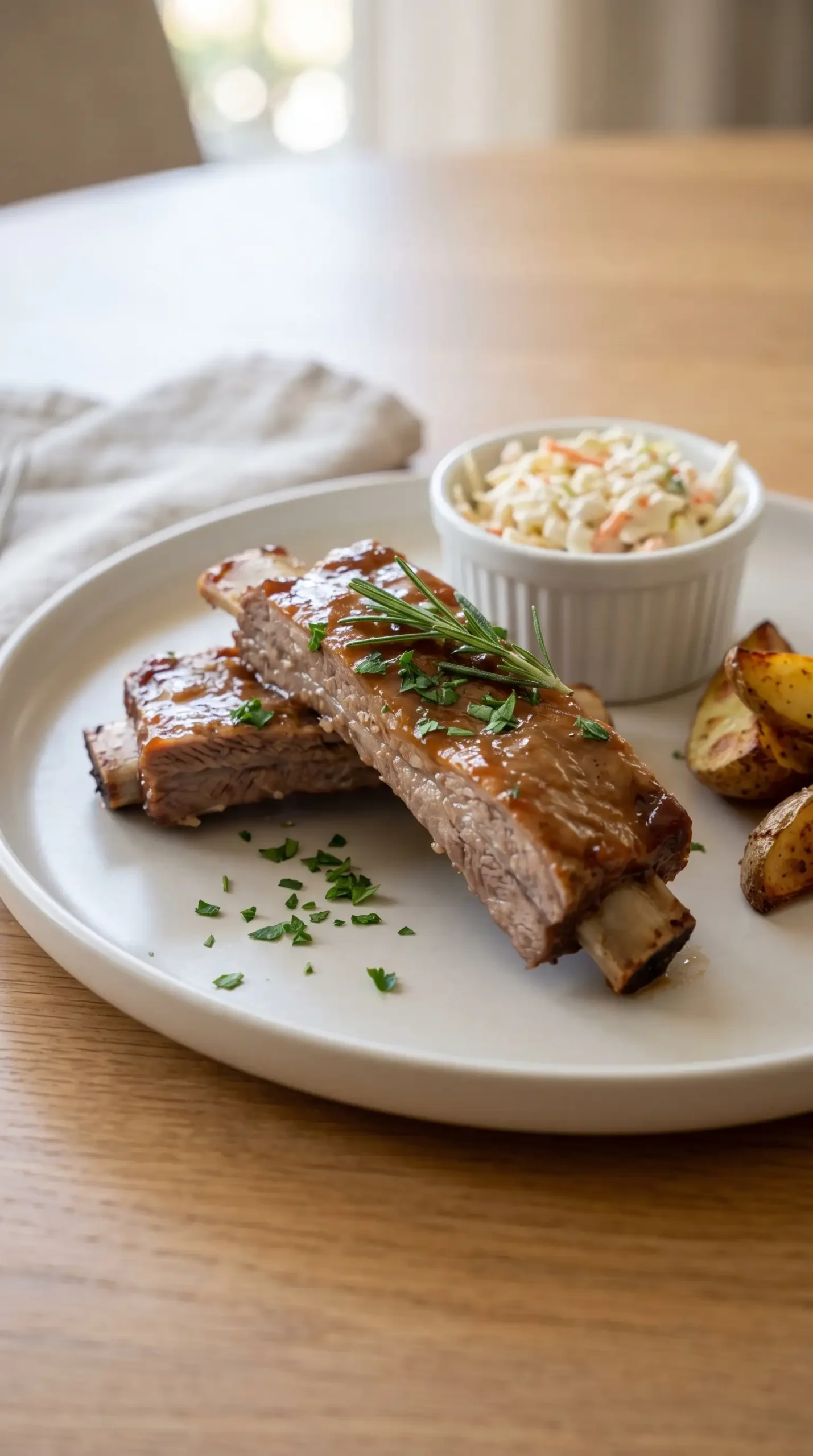
Slicing the ribs between the bones makes portions easy to handle, while extra BBQ sauce allows guests to adjust the glaze to their preference. Simple sides such as grilled corn, classic creamy coleslaw, baked potatoes, or a fresh green salad balance the richness of the meat.
Storage Practices That Protect Rib Texture
Proper storage helps leftover ribs stay enjoyable after the main meal. Place cooled ribs in an airtight container and include a small amount of cooking liquid or extra BBQ sauce to help retain moisture.
Freezing individual portions in freezer-safe bags makes it easier to reheat only what is needed. Thaw frozen ribs overnight in the refrigerator before warming them again.
Gentle reheating preserves the texture developed during roasting. Wrapping ribs in foil and warming them in a low oven helps prevent the meat from becoming dry.
| Storage option | Protection step | Reheating approach |
|---|---|---|
| Refrigerated ribs | Add cooking liquid or BBQ sauce | Warm gently in foil |
| Frozen portions | Use freezer-safe bags | Thaw in refrigerator first |
| Saved pan juices | Keep for moisture support | Add during reheating |
Mistakes That Ruin Beef Ribs Recipe Tenderness
High heat is one of the biggest risks when preparing ribs. Raising the oven temperature to speed up cooking can dry the meat before the connective tissue has enough time to soften.
Another common problem comes from sauce timing. BBQ sauce contains sweet elements that can burn if exposed to heat for too long, so applying it near the end of cooking creates a better glaze.
Skipping preparation steps can also affect the outcome. removing the rib membrane helps improve tenderness because this tough connective layer can affect the eating texture of finished ribs, and allowing the seasoned meat to rest before cooking helps the rub adhere more effectively.
- Rushed roasting: Avoid using higher heat to replace the slow cooking process.
- Early glazing: Add BBQ sauce near the end to reduce the chance of burning.
- Missed trimming: Remove the membrane before seasoning and roasting.
Flavor Variations for Beef Ribs Recipe Finishes
Different finishing touches can create new versions of the same dish. A spicier rub, a citrus accent, or a brief broiler finish for caramelization can change the final character while keeping the core oven method consistent.
Resting and Slicing Choices After Roasting
Resting the ribs after they leave the oven is a small step with an important purpose. The pause gives juices time to redistribute, helping each serving maintain a more even texture.
Cutting between the bones creates portions that are simple to serve. This approach also makes it easier for guests to take individual pieces without disturbing the rest of the cooked ribs.
Beef Ribs Recipe Preparation Timeline Decisions
Planning ahead can make the cooking process easier. The ribs can be seasoned and refrigerated up to 24 hours before roasting, allowing the flavors from the rub to develop before the oven stage begins.
Equipment Choices for Reliable Rib Cooking
A few basic tools support consistent results. Aluminum foil helps maintain moisture, paper towels assist with drying the meat before seasoning, and a meat thermometer provides a clear indication of when tenderness has been reached.
Finishing Details That Complete Beef Ribs Recipe
Small presentation details can brighten the finished dish. A garnish of chopped parsley and a lemon wedge adds contrast, while serving additional BBQ sauce gives everyone control over the amount of glaze.
Beef Ribs Recipe Results Come From Controlled Cooking
Beef ribs become tender when the cooking process gives the meat enough time, moisture, and steady heat to transform its texture. The combination of a seasoned exterior, foil protection, and careful temperature checking creates a reliable path to flavorful ribs.
The most important judgment is patience: maintaining the slow oven approach protects the texture that makes tender oven baked ribs memorable and allows the flavors built by the rub and glaze to remain balanced.
Beef Ribs Recipe Texture Questions and Answers
How do I keep ribs moist during cooking?
Keeping the ribs wrapped in foil during the roast helps trap steam and protects the meat from drying during the extended cooking period.
Can I prepare the rub ahead of cooking?
Yes, the seasoned ribs can be refrigerated before roasting so the spice mixture has more time to settle onto the surface.
Why do my ribs need a thermometer?
A thermometer helps confirm that the ribs have reached 195°F, which indicates the connective tissue has softened enough for a tender texture.
Can these ribs be cooked on a smoker or grill?
Low indirect heat can be used with other equipment, but cooking conditions may vary depending on the smoker or grill setup.
How should leftover ribs be reheated?
Reheat ribs gently while wrapped in foil, using a low oven and adding saved cooking liquid or sauce to help maintain moisture.
Beef Ribs Recipe for Tender Oven-Baked Ribs with Bone-in
This beef ribs recipe delivers tender oven-baked bone-in ribs with a rich smoky flavor and a juicy, fall-apart texture. It is a comforting choice for gatherings or a hearty homemade meal when you want deeply seasoned ribs.
Ingredients
Method
Preparation
- Trim away excess fat from the beef ribs, remove the membrane from the underside, and dry the ribs with paper towels.
- Mix the brown sugar, paprika, garlic powder, salt, black pepper, and chili powder together in a bowl to create the spice mixture.
- Cover the beef ribs evenly with the spice mixture and allow them to rest for 30 minutes before cooking.
Cooking
- Heat the oven to 275°F / 135°C, place the seasoned ribs in aluminum foil with cooking liquid, and roast for 3 to 4 hours until tender.
- Use a meat thermometer to check that the beef ribs reach an internal temperature of 195°F / 91°C for the best tenderness.
- Apply BBQ sauce over the ribs during the last 15 to 20 minutes of cooking to form a glaze.
- Take the ribs out of the oven, let them rest briefly, then slice between the bones and serve.
Notes
Use bone-in beef ribs when possible, and save any leftover cooking liquid or BBQ sauce to use when reheating so the ribs stay moist.