
From morning breakfasts to evening dinners, Tasteza Recipes offers quick and easy recipe ideas, featuring everything from wholesome meals to delicious desserts for every moment and every occasion.


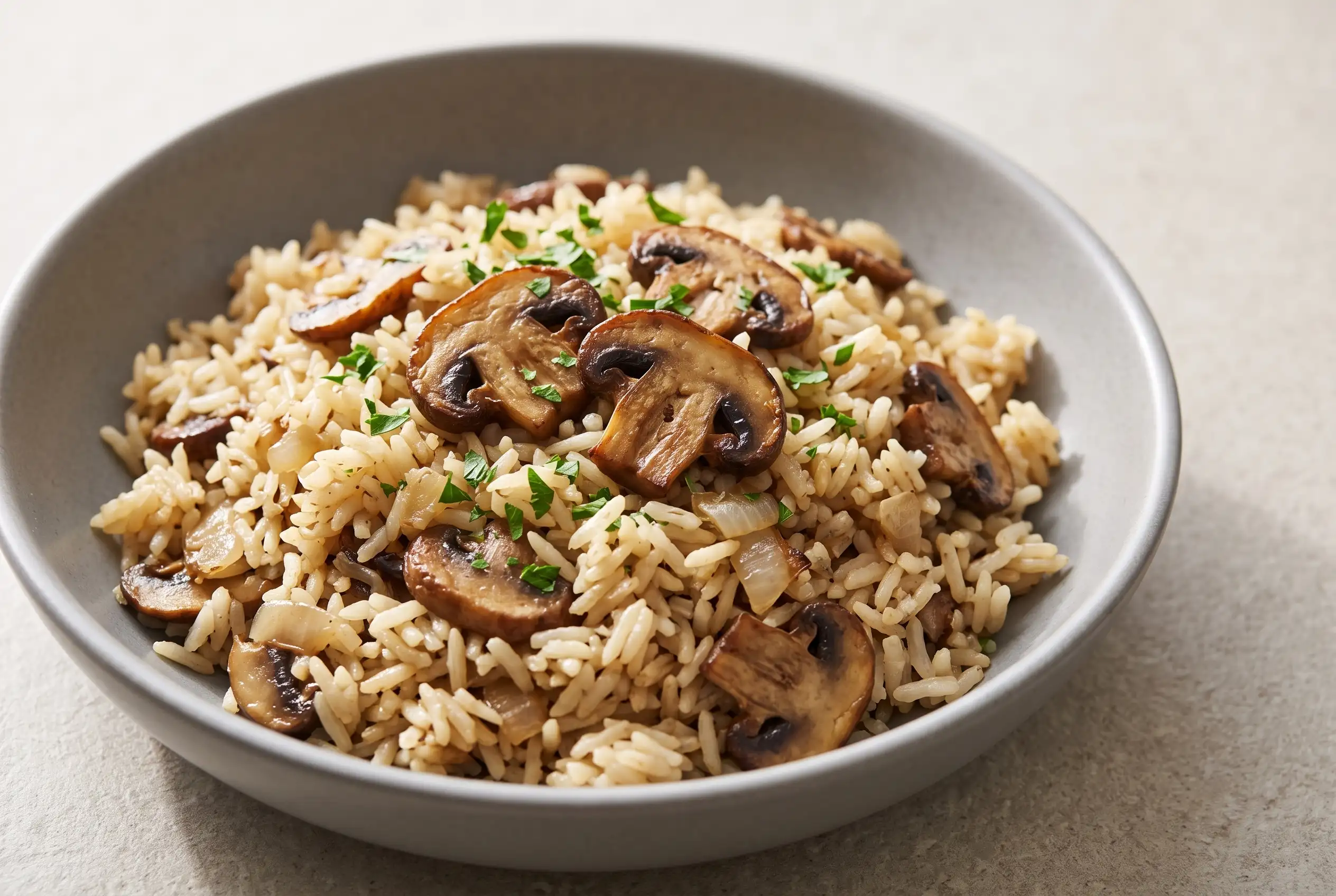
Mushroom rice brings tender sliced mushrooms, fluffy grains, onion, garlic, and vegetable broth together in a practical stovetop dish. Everything cooks in one pan, making it useful for busy dinners, simple lunches, or meal prep without creating a pile of cookware.
Earthy mushrooms give the rice enough savory character to stand beside poultry, tofu, fish, or roasted vegetables. A brief sauté builds aroma, a short toasting step supports grain texture, and gentle covered cooking allows the liquid to absorb evenly.
Because the ingredient list relies on familiar staples, stovetop mushroom rice is easy to adapt to what is already in the kitchen. Vegetable broth produces a fuller savory base, while water keeps the flavor lighter and lets the mushrooms remain especially noticeable.
Why Mushroom Rice Works in One Pan
One pan mushroom rice succeeds because each cooking stage prepares the same vessel for the next one. Onion and garlic flavor the oil, mushrooms soften in that aromatic base, and the rice picks up the seasoned coating before the broth is added.
Keeping those stages together preserves the browned bits and cooking juices that might otherwise be left behind in a separate skillet. The rice absorbs that concentrated flavor during the covered simmer, so the dish tastes cohesive without needing a complicated sauce.
Minimal handling also protects the texture. Once the liquid reaches a boil and the heat is reduced, the covered rice can cook steadily without frequent stirring. Less movement helps the grains remain separate instead of releasing excess starch into the pan.
Long-Grain Rice Gives the Lightest Texture
Long-grain white rice is the most dependable choice when you want fluffy, distinct grains. Fragrant jasmine rice can be used with careful liquid measurement, while short-grain rice creates a softer, stickier finish and may require a slight liquid adjustment.
Mushroom and Broth Choices Shape the Flavor
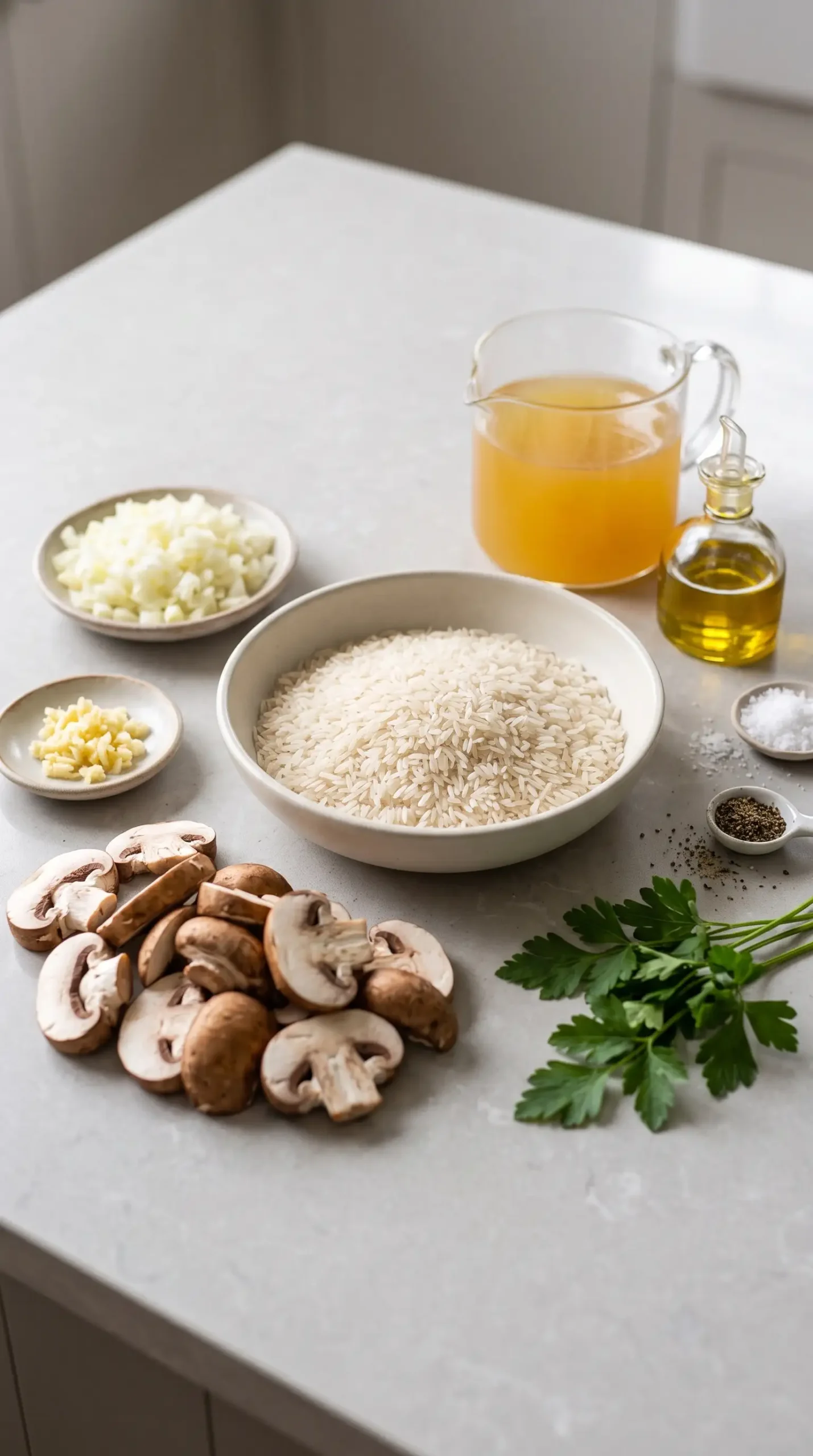
Sliced mushrooms should be fresh enough to hold their shape during sautéing. Even though they soften as they cook, visible slices give mushroom rice a more appealing texture than pieces that collapse completely into the grains.
Vegetable broth creates a savory result while keeping the base vegan. Water is a workable substitute when broth is unavailable, though careful seasoning becomes more important because there is less built-in flavor.
Salted broth can vary in intensity, so seasoning is best adjusted after the rice has finished absorbing the liquid. Pepper can be added according to taste, and fresh parsley provides a bright garnish that contrasts with the earthy mushrooms.
| Choice | Texture Effect | Flavor Effect | Best Use |
|---|---|---|---|
| Long-grain white rice | Separate, fluffy grains | Clean and mild | Classic side dish |
| Short-grain rice | Softer and stickier | More cohesive | Comforting bowl-style serving |
| Vegetable broth | No major texture change | Deeper savory base | Fuller vegetarian flavor |
| Water | No major texture change | Lighter and simpler | Pantry-friendly preparation |
Rinsing Helps the Grains Stay Separate
Rinsing the rice until the water runs clear removes loose surface starch that can contribute to clumping. Let the excess water drain before adding the grains to the pan so the measured cooking liquid remains accurate.
Pan Heat Controls Mushroom Texture
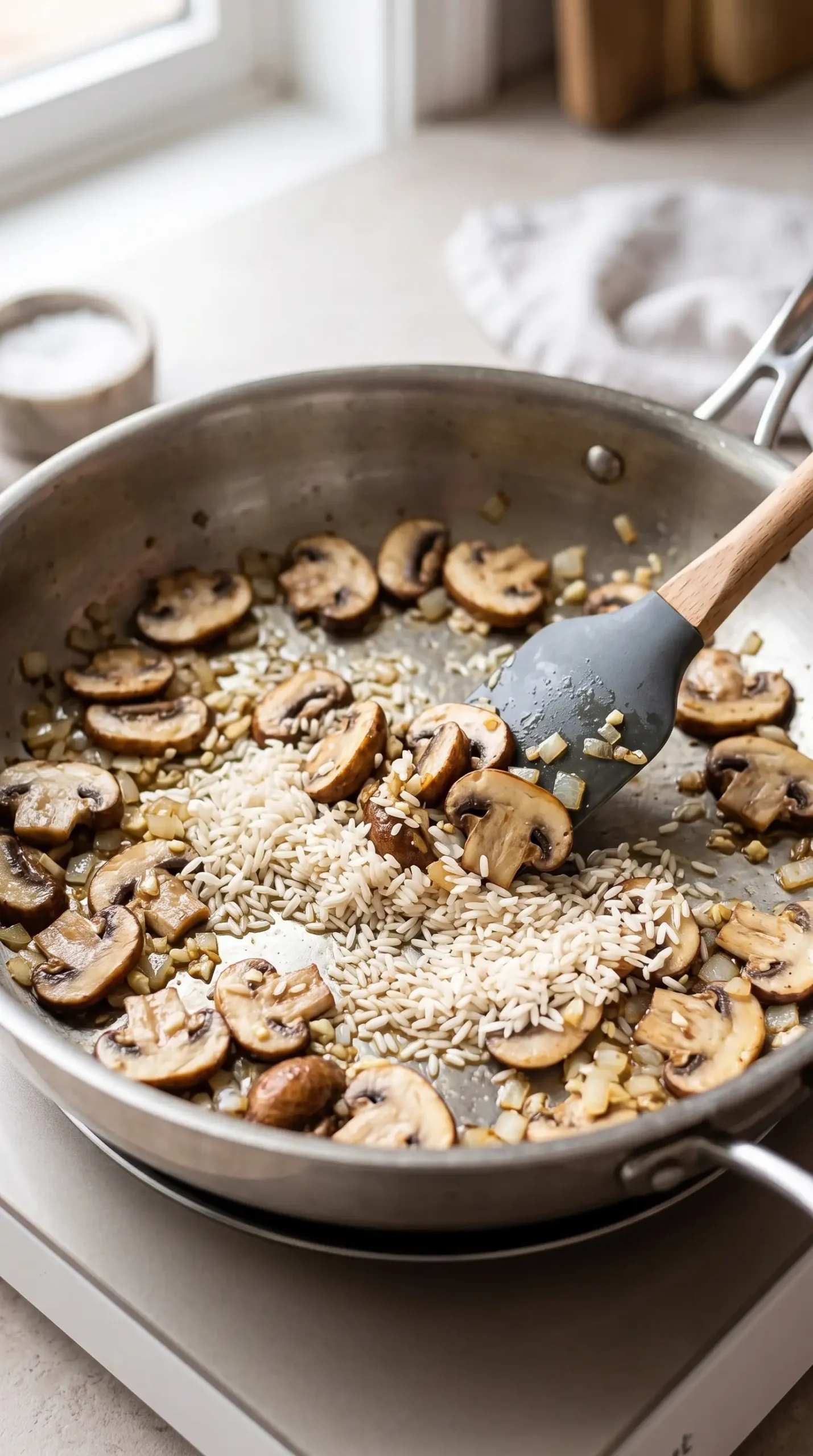
Medium heat is useful at the beginning because it softens the chopped onion and releases the aroma of minced garlic without demanding constant high-heat attention. Garlic should smell fragrant, not scorched, before the mushrooms enter the pan.
Space around the mushroom slices allows moisture to escape. An overcrowded pan traps steam, which softens the mushrooms without giving them a chance to develop a firmer surface and concentrated taste.
Once the mushrooms are soft, stirring in the rice for about a minute coats the grains with oil and aromatic juices. That short toast encourages a subtle nutty note and helps the rice maintain its shape during simmering.
- Use moderate heat: Keep onion and garlic aromatic without browning them too aggressively.
- Leave breathing room: Spread mushrooms across the pan so released moisture can evaporate.
- Toast briefly: Coat the rice for about a minute before adding the liquid.
- Measure carefully: Accurate broth or water prevents a gummy finish.
A Covered Simmer Finishes the Rice Evenly
After the broth is poured in, bring the pan to a boil before lowering the heat. That initial boil establishes an even cooking temperature, while the low covered simmer gives the grains time to absorb liquid without scorching the bottom.
The lid should remain in place during the main cooking period. Opening it repeatedly releases steam, interrupts the heat inside the pan, and can leave the rice unevenly cooked.
When the grains are tender and the liquid has been absorbed, remove the pan from the heat and leave it covered for five minutes. Resting gives remaining steam time to settle through the rice before fluffing.
Fork Fluffing Protects the Finished Grains
A fork separates the cooked rice gently without compressing it. Work from the edges toward the center, lifting the grains lightly, then add parsley and make the last salt-and-pepper adjustment before serving.
Mistakes That Can Ruin Mushroom Rice
Too much liquid is the clearest path to gummy rice. Measuring both the rice and broth accurately keeps the intended ratio intact, while a low simmer prevents the bottom from cooking faster than the top.
Repeated stirring creates another texture problem because it encourages starch to move from the grain surface into the surrounding liquid. Once the pan is covered, leave the rice alone until the cooking time has passed.
Cold broth can slow the return to a simmer after it enters the pan. Warm broth keeps the temperature steadier and helps the cooking process move forward with less interruption.
| Problem | Likely Cause | Visible Sign | Correction |
|---|---|---|---|
| Gummy rice | Excess liquid or frequent stirring | Heavy, sticky grains | Measure carefully and avoid stirring while covered |
| Undercooked grains | Steam escaped too often | Firm centers after simmering | Keep the lid closed during cooking |
| Soggy mushrooms | Overcrowded pan | Pale slices with pooled moisture | Use a wider pan or cook with more space |
| Flat flavor | Water used without enough seasoning | Mild taste after cooking | Adjust salt, pepper, lemon, or soy sauce at the end |
Serving Mushroom Rice as a Side or Main
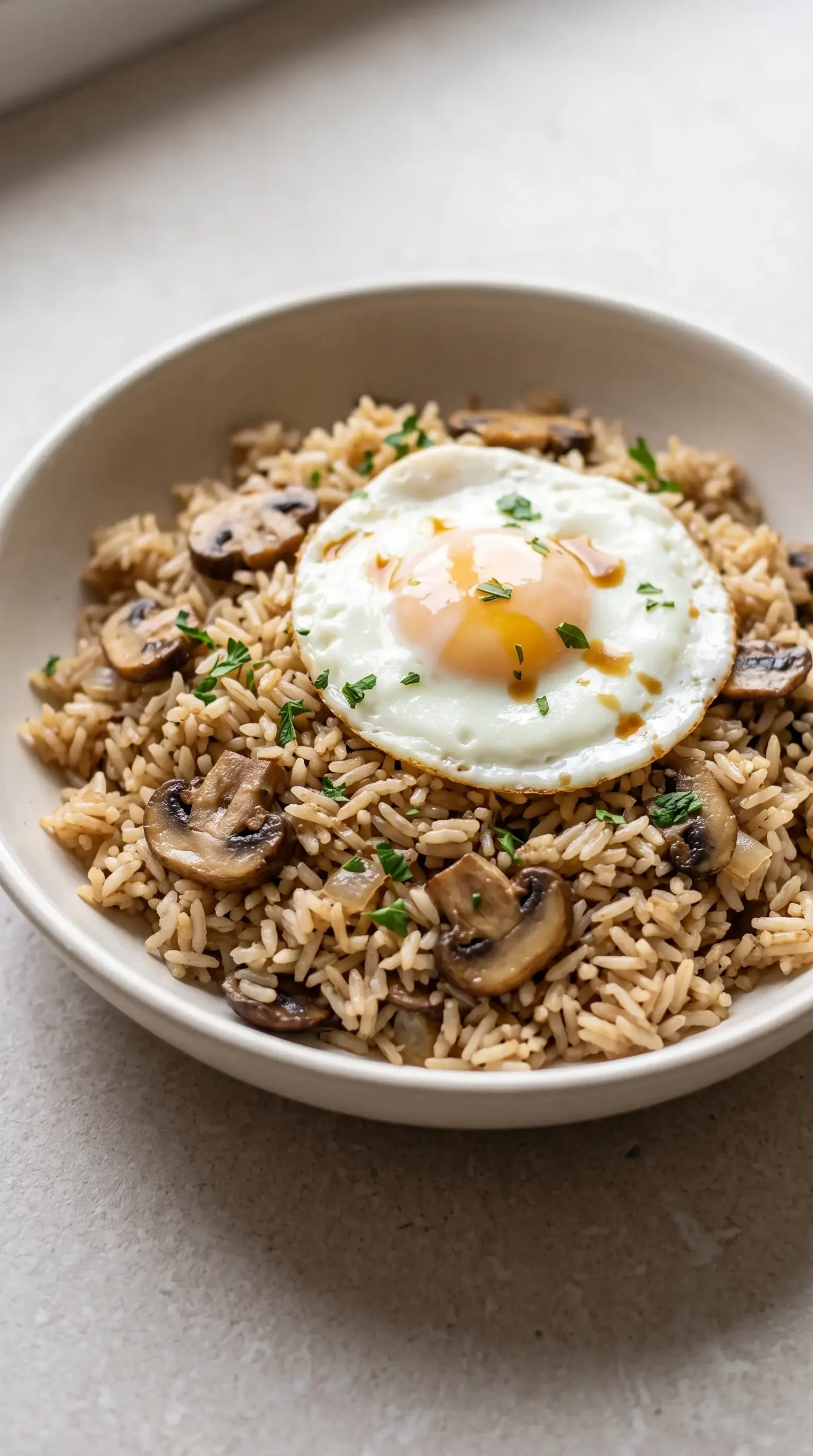
Warm mushroom rice pairs naturally with roasted or grilled proteins, including poultry, white fish, and tofu. Its mild savory profile supports a main dish without competing with stronger marinades or sauces.
For a vegetarian plate, add roasted root vegetables and a light lemon vinaigrette. The acidity lifts the earthy mushroom flavor and keeps the meal from feeling overly heavy.
A fried egg and a splash of soy sauce turn the rice into a quick bowl meal. The same mixture can also fill bell peppers or lettuce cups when a different serving format is useful.
Fresh parsley or chopped chives add color just before serving. A light salad can provide contrast alongside the warm grains, especially when the rice is served as the main element of the meal.
Simple Additions Change the Finish
Small finishing ingredients can shift the character of a simple mushroom rice recipe without changing the basic stovetop approach. Choose additions after the rice is cooked so the grain texture remains controlled.
- For brightness: Add a squeeze of lemon just before serving.
- For deeper savoriness: Finish with a small splash of soy sauce.
- For creaminess: Fold in a splash of cream or a spoonful of mascarpone after fluffing.
- For crunch: Scatter toasted pine nuts over the top.
- For a fuller main: Stir in cooked lentils or chickpeas near the end.
Peas, diced carrots, or bell peppers can also be included during the last several minutes of cooking. Adding them late helps preserve more color and texture while allowing them to warm through with the grains.
Storage Keeps Leftover Rice Useful
Cool leftovers within two hours of cooking, then transfer them to an airtight container. Refrigerated rice can be kept for up to four days when it is cooled promptly and stored properly.
Freezing works well for longer storage. Divide the rice into freezer-safe portions, freeze for up to two months, and thaw overnight in the refrigerator before reheating.
Gentle stovetop reheating gives the best control over moisture. Add a splash of water or broth, cover the pan, and warm over low heat until the rice is steaming hot.
Meal Prep Benefits From Small Portions
Individual containers make mushroom rice easier to pair with different proteins or vegetables throughout the week. Smaller portions also reheat more evenly because steam can move through the rice without leaving a cold center.
Reliable Mushroom Rice Depends on Steam Control
Measured liquid, a steady low simmer, and an undisturbed lid matter more than constant attention. Those three decisions allow the mushrooms to remain distinct while the grains absorb the savory broth without becoming heavy or pasty.
Proper resting completes the process after the heat is turned off. Once the covered steam settles and the rice is fluffed gently, the finished pan can move easily between side dish, bowl base, and light main.
Mushroom Rice Texture and Substitution Questions
Can chicken broth replace vegetable broth?
Chicken broth can be used when a vegetarian base is not needed. Because packaged broth may already contain salt, taste the cooked rice before adding extra seasoning.
Can mushroom rice be adapted to a rice cooker?
Sauté the onion, garlic, and mushrooms first, then transfer them with the rice and broth to the rice cooker. Use the standard cooking setting and fluff once the cycle is complete.
Why is the rice still firm after cooking?
Firm grains can result when steam escapes or the simmer stops too early. Add a small splash of water, cover the pan again, and continue over low heat until the centers soften.
Can brown rice be used in place of white rice?
Brown rice generally needs more liquid and a longer cooking period than the method described here. Use the package directions for its liquid ratio and timing while keeping the same sautéed mushroom base.
How can the mushrooms taste more pronounced?
Give the slices enough pan space to release moisture before adding the rice. Using vegetable broth instead of water also strengthens the savory background without covering the mushroom flavor.
What is the best way to loosen dry leftovers?
Sprinkle a little broth or water over the cold rice, cover it, and reheat slowly. The added moisture turns to steam and softens the grains without requiring heavy stirring.
Mushroom Rice with Onion Garlic and Vegetable Broth
Mushroom Rice with Onion Garlic and Vegetable Broth is a comforting rice dish with tender grains, savory mushrooms, and aromatic flavors. It is an easy side or weeknight recipe made with simple ingredients and a hearty vegetable broth base.
Ingredients
Method
Preparation
- Warm olive oil in a large pan over medium heat. Add the chopped onion and minced garlic, then cook until fragrant.
- Add the sliced mushrooms and cook until they become softened.
- Mix in the rice and cook for about 1 minute to lightly toast the grains.
- Add the vegetable broth or water and bring the mixture to a boil. Lower the heat, cover the pan, and simmer for 15-20 minutes until the rice is tender.
- Take the pan off the heat and keep it covered while the rice rests for 5 minutes.
- Season with salt and black pepper, then fluff the rice with a fork.
- Finish with fresh parsley before serving.
Notes
Use warm broth when possible and keep the pan covered while the rice simmers to support even cooking.