
From morning breakfasts to evening dinners, Tasteza Recipes offers quick and easy recipe ideas, featuring everything from wholesome meals to delicious desserts for every moment and every occasion.


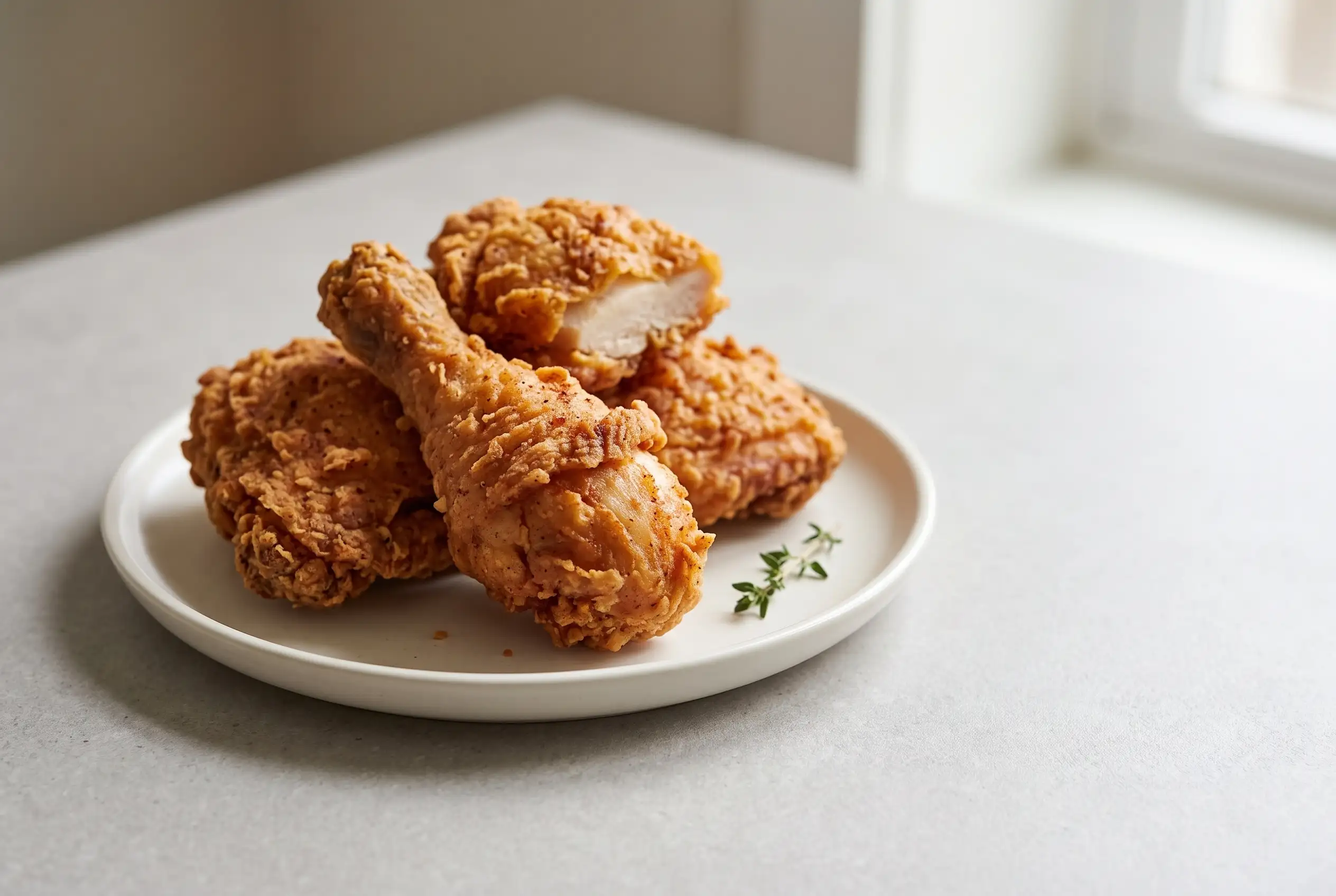
copycat kfc chicken brings together juicy buttermilk-marinated chicken and a deeply seasoned, crisp coating made for home frying. The familiar character comes from more than a long spice list: flour and cornstarch must cling securely, the oil must stay steady, and every piece needs enough space to fry without steaming. Careful handling at those points produces a craggy crust that stays attached when the chicken is turned, drained, and served.
Why Copycat KFC Chicken Develops a Craggy Crust
Small ridges form when the damp surface of the marinated chicken meets the dry flour mixture. Pressing the coating firmly creates irregular patches, while tiny traces of marinade hydrate parts of the flour and encourage crisp flakes during frying.
Loose flour behaves differently. A powdery layer can drift into the oil, darken quickly, and leave bare spots on the meat. Each piece should look fully covered, with no glossy areas showing through, but it should not carry clumps so wet that they become heavy.
Crust texture also depends on undisturbed contact. Frequent turning can scrape the coating before it has set, so allow the first side to become firm and lightly golden before moving the chicken.
Buttermilk Keeps the Chicken Moist
Several hours in the buttermilk-and-egg mixture gives the seasoning time to reach the surface while helping the meat retain moisture during frying. Keep the bowl refrigerated and make sure the pieces are surrounded by marinade, turning crowded pieces once if necessary so every surface is exposed.
The Spice Blend Needs Even Distribution
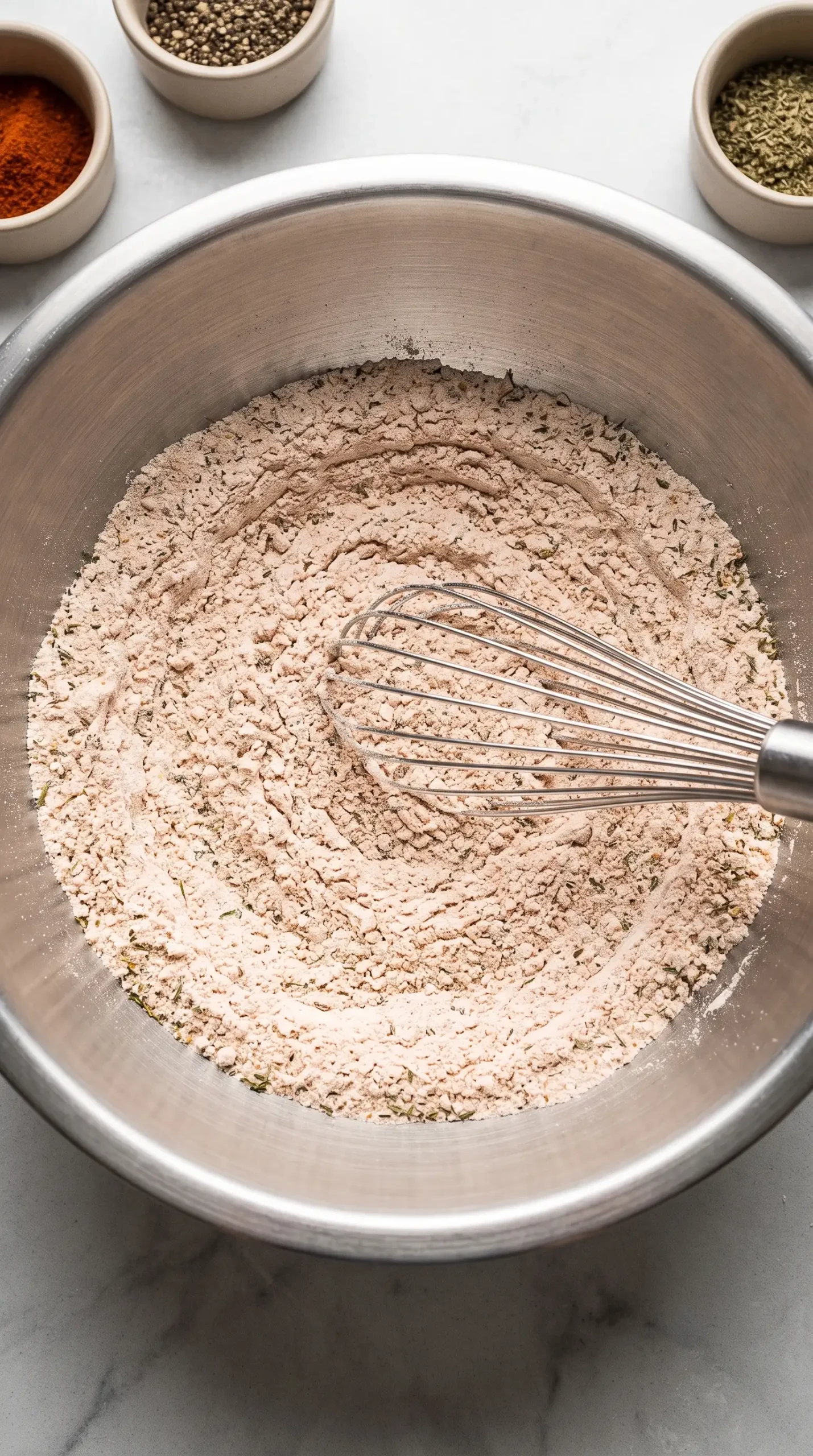
A convincing kfc style fried chicken coating depends on seasoning being dispersed through the flour, not concentrated in a few pockets. Paprika, black pepper, white pepper, dried herbs, celery salt, mustard, ginger, garlic, and onion powders contain particles of different sizes, so a quick stir is not enough.
Whisking the dry mixture thoroughly breaks up compacted powders and distributes the salt through the full bowl. Scrape along the bottom and edges, where finer spices often collect, before the first piece of chicken is dredged.
Balanced distribution matters more than making any single spice dominant. In copycat kfc chicken, the blend should taste layered across the whole crust, with pepper, herbs, and savory seasonings appearing together instead of arriving as separate, harsh notes.
Flour and Cornstarch Serve Different Crust Jobs
All-purpose flour supplies the coating’s structure, while cornstarch limits some gluten development and encourages a lighter, more brittle surface. Keeping both evenly combined prevents sections that fry up tough beside patches that become unusually pale or fragile.
Firm Dredging Builds Better Coverage
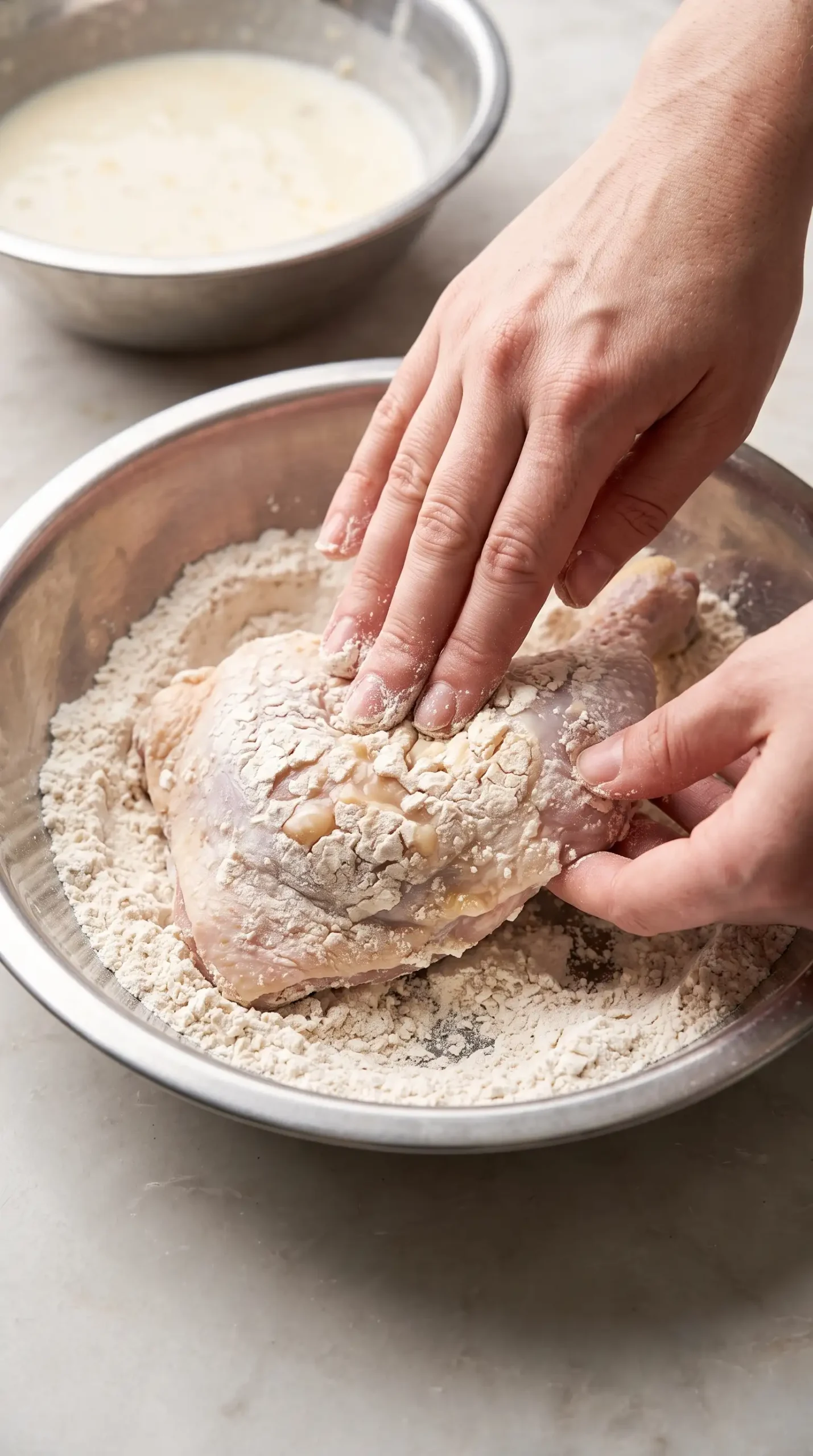
After lifting a piece from the marinade, let the excess fall back into the bowl until it stops streaming. The chicken should remain damp enough to bind the flour, yet not so wet that the seasoned mixture turns into paste around it.
During dredging, press the dry mixture over every curve, including folds of skin and narrow areas near the bone. Use the flat of your fingers when coating the chicken, a firm dredging technique suited to chicken-fried steak, so the flour reaches damp creases and builds the rough surface associated with crispy copycat kfc chicken.
Before moving on, lift the coated piece and give it one gentle shake. That removes flour that never bonded while preserving the textured patches that will become the crispest parts of the crust.
A Short Rack Rest Secures the Coating
Resting the dredged chicken on a wire rack allows moisture from the marinade to hydrate the inner edge of the flour layer, helping it grip the meat. The surface may look slightly tacky or cracked after several minutes; that change is useful and should not be covered with another heavy dusting of flour.
Oil Stability Controls Color and Crispness
A thermometer provides the clearest control over frying conditions. Heat the oil to 350°F before adding chicken, then watch the reading after each piece enters because the oil temperature drops as cold food is added.
When heat falls too far, the coating absorbs more oil before it firms and can emerge dense or greasy. Excessive heat creates the opposite problem: the outside darkens while thick pieces still need more cooking near the bone.
Between batches, allow the oil to recover before adding more chicken. Copycat kfc chicken fries more evenly when temperature recovery determines the pace, even if the next coated pieces are already waiting on the rack.
Different Chicken Cuts Need Separate Attention
Legs, thighs, and breasts do not always finish at the same moment because their shape, thickness, and bone structure differ. Grouping similarly sized pieces in a batch makes turning and doneness checks easier.
| Chicken piece | Frying behavior | Useful handling cue |
|---|---|---|
| Drumsticks | Curved shape browns unevenly if left still | Rotate to expose all sides without scraping the crust |
| Thighs | Broad skin surface can color quickly | Keep the skin from resting against the hottest part of the pan |
| Breast pieces | Thickness may vary considerably | Check the deepest section and remove each piece individually |
| Mixed batches | Smaller pieces may finish first | Use temperature, not batch timing alone, to decide removal |
Once a piece is safely cooked, remove it instead of waiting for every item in the batch to match. That prevents smaller cuts from drying out while larger pieces continue frying.
Doneness Requires More Than Golden Color
Deep browning indicates that the coating has cooked, but color cannot confirm that the meat beside the bone is ready. Insert an instant-read thermometer into the thickest part without touching bone and verify an internal temperature of 165°F.
Clear juices can support the assessment, although they are less dependable than a thermometer. Bone-in chicken may also show naturally darker areas around joints, so visual inspection alone can lead to unnecessary extra frying.
Carryover heat continues briefly after removal. Pulling each piece as soon as it reaches a safe temperature protects the moisture established by the buttermilk marinade and keeps breast meat from becoming firm or stringy.
Copycat KFC Chicken Mistakes That Damage the Crust
Most coating failures come from moisture management, premature handling, or unstable oil. Each has an observable warning sign that can be corrected before the entire batch is affected.
- Coating slides off: Excess marinade remained on the chicken, or the dredged pieces skipped their rack rest.
- Crust turns greasy: Too many pieces lowered the oil temperature and slowed the coating from setting.
- Dark outside, underdone center: The oil ran too hot for the thickness of the chicken.
- Bare scraped patches: Pieces were turned before the first side became firm.
- Flat, smooth coating: The flour was lightly dusted on instead of being pressed against the damp surface.
For later batches, correct only the factor connected to the visible problem. Adding extra flour will not repair cool oil, and raising the heat will not secure a coating that was placed into the fryer while still loose.
Deep Fryers and Skillets Handle Batches Differently
Both tools can produce copycat kfc chicken, but they require different levels of attention. A deep fryer surrounds the pieces more evenly, while a heavy skillet makes oil depth, turning, and hot spots more influential.
| Control point | Deep fryer | Heavy skillet |
|---|---|---|
| Heat recovery | Often steadier between additions | May drop quickly after a crowded batch |
| Chicken position | Pieces are more fully surrounded by oil | Contact side needs deliberate turning |
| Browning | Usually more even around curved pieces | Requires watching for hotter areas |
| Batch management | Basket capacity sets a clear limit | Open surface can tempt overcrowding |
Draining Preserves the Crisp Surface
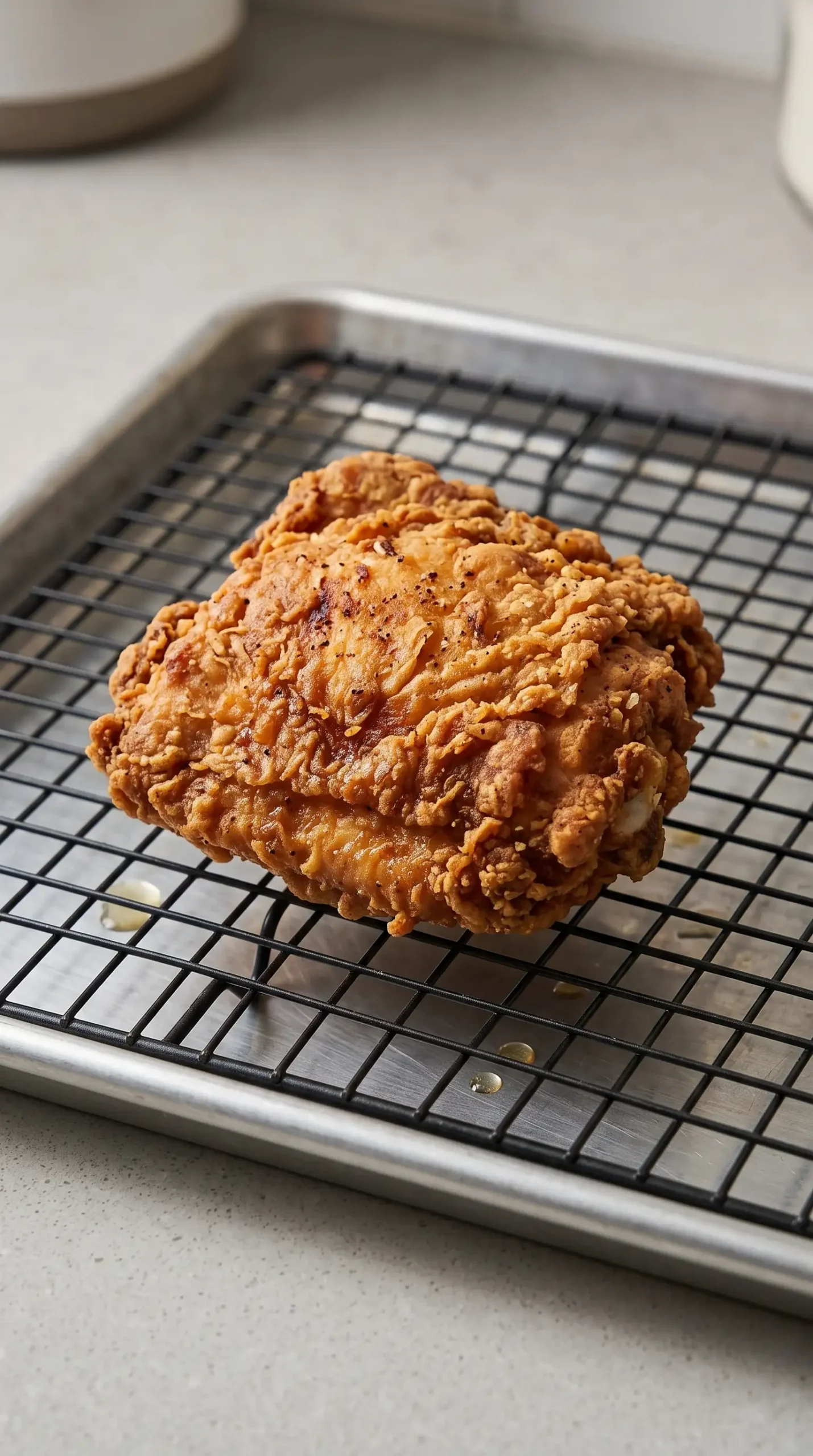
Freshly fried chicken needs a brief rest so steam can settle and the crust can become firm enough to bite cleanly. Drain pieces without stacking them; trapped steam between hot surfaces softens the coating, while a single layer keeps the ridges exposed to air.
Serving and Storing Buttermilk Fried Chicken
Serve the chicken after its short post-fry rest, when the coating has stopped aggressively bubbling but remains hot and crisp. Cutting into a piece immediately releases more steam through the crust and can make the coating near the cut edge soften.
For leftovers, cool the chicken before covering it so condensation does not soak the breading. Refrigerate promptly in a shallow container, keeping pieces in a single layer when space allows.
- Cool uncovered briefly: Let surface steam escape before transferring the chicken to storage.
- Refrigerate safely: Cover once the pieces are no longer releasing heavy steam.
- Reheat with dry heat: Use an oven or air fryer so moving hot air can restore some crispness.
- Avoid the microwave when texture matters: Moist heat warms the meat but softens the crust.
Reheated kfc style fried chicken should be warmed until the center is hot, with space around each piece for air circulation. Large breast portions may benefit from being reheated separately from smaller legs or thighs so the crust does not overbrown before the center warms.
A Stable Crust Defines Copycat KFC Chicken
Firmly pressed flour, a rack rest, and controlled frying heat work as one system. When any link is skipped, the coating can loosen, absorb excess oil, or brown before the meat is cooked through.
Good copycat kfc chicken therefore depends less on rushing pieces into the fryer and more on reading their condition at each critical point: damp but not dripping, fully coated, slightly set on the rack, steadily bubbling in the oil, and safely cooked at the center.
Copycat KFC Chicken Coating Questions Answered
Why does the coating fall off after frying?
Skin or meat that is extremely wet can create a slippery layer beneath the flour. Let excess marinade drip away, press the dredge on firmly, rest the coated pieces, and use tongs gently at an exposed edge instead of pinching through the crust.
Can the chicken marinate longer than overnight?
An overnight soak is sufficient for flavor and moisture. Extending the marinade much further can make the exterior texture unusually soft, so plan to dredge and fry the chicken the following day.
Can boneless chicken be used?
Boneless pieces can work, but their cooking time will differ from bone-in legs, thighs, and breasts. Choose pieces of similar thickness, monitor the oil carefully, and begin checking internal temperature earlier.
Why are dark crumbs collecting in the oil?
Unattached flour falls from the chicken and continues frying after the pieces are removed. Shake off powdery excess before frying and skim heavily browned crumbs between batches so they do not stick to later pieces and create bitter spots.
Can the seasoned flour be saved after dredging?
Flour that has contacted raw chicken or dripping marinade should not be stored for another meal. Discard the used mixture after dredging, then wash the bowl, rack area, utensils, and nearby surfaces with appropriate food-safety care.
Copycat Kfc Chicken with Buttermilk and Crisp Coating
Copycat KFC chicken features juicy buttermilk-marinated pieces beneath a crisp, deeply seasoned coating. It is a comforting homemade main course when you are craving classic fried chicken.
Ingredients
Method
Marinating
- In a large bowl, whisk together the buttermilk and eggs.
- Add the chicken pieces, cover, and marinate in the refrigerator for at least 4 hours or overnight.
Coating
- In another large bowl, whisk together the flour, cornstarch, salt, black pepper, paprika, garlic powder, onion powder, thyme, basil, oregano, celery salt, ground mustard, ginger, and white pepper.
- Remove the chicken from the marinade and let the excess drip off.
- Dredge each piece in the flour mixture, pressing firmly so the coating adheres well.
- Place the coated chicken on a wire rack and let it rest for 10–15 minutes.
Frying
- Heat the vegetable oil in a deep fryer or heavy skillet to 350°F (175°C).
- Fry the chicken in batches, turning occasionally, for 15–18 minutes, until golden brown and the internal temperature reaches 165°F (74°C).
- Drain the fried chicken on paper towels.
Serving
- Let the chicken rest for 5 minutes before serving.
Notes
Let the chicken rest after dredging so the coating adheres during frying. Use a thermometer to maintain the oil temperature at 350°F (175°C).